The right mobility supplier is about more than finding a product. It also means considering how the equipment fits daily routines and what support may be useful over time. If you’re searching for a comparison between Mobility and You and Mobility Headquarters, this guide gives you practical criteria for evaluating your options.
Start with the person’s needs, then compare equipment categories, purchase or hire options, and servicing and repairs. Mobility and You supplies mobility scooters, power chairs, wheelchairs, walkers, lift chairs, adjustable beds, bathroom aids and daily living aids. Use the guidance below to identify which categories and support options are relevant to the person’s circumstances.
A useful comparison looks beyond product names. Consider where the equipment will be used, the activities it should support, how long it may be needed and whether ongoing equipment support matters. These details can help you narrow down options without assuming that one product or supplier suits everyone.
Key Takeaways
- Compare equipment and support together, rather than choosing on product range alone.
- The mobility and you vs mobility headquarters brisbane comparison is most useful when you apply clear criteria to each option.
- Use everyday activities, access needs and the user’s preferences to narrow down relevant equipment categories.
- Weigh hiring against purchasing, and include servicing and repairs in your longer-term considerations.
- Mobility and You supplies mobility and daily living equipment and offers equipment hire, servicing and repairs.
Mobility and You vs Mobility Headquarters: what should you compare?
Choosing mobility equipment is a personal decision. A useful comparison focuses on how well the options match the person’s needs, routines and preferences, rather than declaring one supplier “best” without clear criteria. If you searched for mobility and you vs mobility headquarters brisbane, use the comparison to identify what matters to you and evaluate each option against those priorities.
Four areas are especially useful to consider: equipment categories, purchase or hire, servicing and repairs, and the information available to help you make a decision. Mobility aids serve different purposes, so an overview of the types of mobility aids and their uses can provide context before you compare products. Your daily routine, access needs and expected length of use may all influence which category is relevant.
What matters most when comparing mobility suppliers?
Separate the equipment from the support that may be useful before and after you obtain it. Choosing between a walker and a wheelchair, for example, is different from deciding whether hire suits a temporary need or whether servicing and repairs matter for ongoing use. Consider the person’s routine, the environments where they expect to use the equipment and any practical requirements that could affect the choice.
Include the person who will use the equipment wherever possible. Their comfort, confidence and preferences are central to a suitable decision. If their needs are still being assessed, keep the options open rather than treating a long-term purchase as the only route.
How to keep a provider comparison fair
Compare like with like: equipment categories against equipment categories, hire against hire, and servicing against servicing. Start by defining what matters most to the user, such as the type of equipment, how it will be accessed or whether ongoing equipment support is important. Then consider each supplier’s stated options against the same criteria. Avoid ranking suppliers on a feature that is not relevant to the person’s needs.
To keep the comparison practical, note what you need to consider in each area:
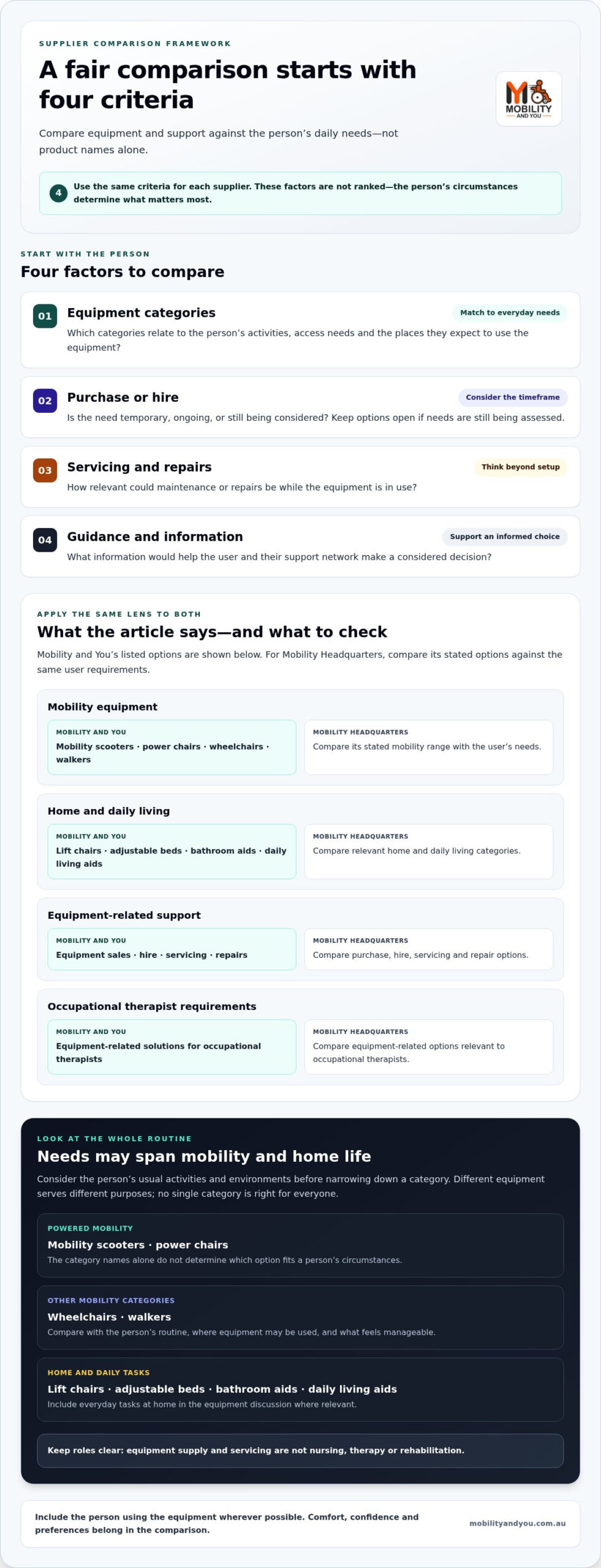
- Equipment: Which category relates to the person’s everyday activities and access needs?
- Purchase or hire: Is the need temporary, ongoing or still being considered?
- Servicing: How relevant could maintenance or repairs be during use?
- Guidance: What information would help the user and their support network make a considered choice?
These questions create a clear starting point without pressure to decide immediately. They also make it easier to compare equipment and support options consistently, while keeping individual circumstances at the centre of the decision.
Compare mobility equipment ranges and support for everyday needs
Equipment needs can extend beyond getting from one place to another. Someone considering powered mobility may also want to explore seating or aids for daily tasks at home. Looking across categories helps you describe what matters in everyday life before narrowing down the options.
Mobility and You supplies mobility scooters, power chairs, wheelchairs, walkers and daily living aids, alongside lift chairs, adjustable beds and bathroom aids. You can explore these categories in the mobility equipment shop. Use the table as a checklist for comparing the equipment and support each supplier offers against the person’s priorities.
| Area to compare | Mobility and You | Mobility Headquarters |
|---|---|---|
| Mobility equipment | Mobility scooters, power chairs, wheelchairs and walkers | Compare the stated mobility equipment range with the user’s needs |
| Home and daily living | Lift chairs, adjustable beds, bathroom aids and daily living aids | Compare relevant home and daily living equipment categories |
| Equipment-related support | Equipment sales, hire, servicing and repairs | Compare purchase, hire, servicing and repair options |
| Occupational therapist needs | Equipment-related solutions for occupational therapists | Compare equipment-related options relevant to occupational therapists |
Comparison note: Use the same criteria for each supplier and focus on options that relate to the person’s requirements. A broad product list is useful only when it includes categories relevant to the user.
Match equipment categories to practical requirements
Scooters and power chairs are both powered mobility categories, but the names alone do not determine which option fits a person’s circumstances. Wheelchairs and walkers are different categories for different mobility situations. Consider the person’s usual activities, where the equipment may be used and what feels manageable. No single category is right for everyone.
Needs may also reach beyond mobility. Bathroom aids and daily living aids can be relevant when everyday tasks are part of the equipment discussion, while lift chairs and adjustable beds are other categories to consider for home use. Thinking through the daily routine can help families avoid focusing on one item before considering the broader picture.
Compare the breadth of support, not just product names
Some people value being able to consider several equipment categories alongside hire, servicing and repairs. Occupational therapists may also have equipment-related requirements; that is distinct from clinical treatment. Equipment supply and servicing are not nursing, therapy or rehabilitation, so keep those roles separate when comparing services.
For readers considering mobility and you vs mobility headquarters brisbane, compare each supplier against the same practical criteria rather than relying on a general ranking. Keep the person’s preferences central, and consider the wider Australian disability perspective through the disability advocacy and support offered by AFDO. That can complement, rather than replace, an individual equipment discussion.
Compare equipment hire, servicing and repairs before deciding
Equipment decisions can change over time. A person may need support for a temporary period, prefer to hire before committing to a purchase, or already own equipment and need servicing or repairs. Comparing hire and after-sales support alongside the equipment itself gives you a fuller picture of the practical options.
Mobility and You offers equipment hire, servicing and repairs. Consider these alongside the equipment categories when weighing what may fit the person’s needs. For a useful mobility and you vs mobility headquarters brisbane comparison, apply the same questions to each supplier: what equipment access options are relevant, and what equipment support may matter over time?
When might hiring be worth considering?
Hire may suit a temporary need, such as a period of recovery, or a situation where requirements are changing and a longer-term decision is still being considered. It can also be an option for someone who would rather not purchase equipment outright. These are circumstances to weigh, not a recommendation that hiring will suit every person or need.
Consider how long the equipment may be needed and what the user prefers. If the need appears short-term, hiring may be worth exploring; for ongoing use, compare that option with purchasing. Mobility and You provides mobility equipment hire options, so you can consider hiring as part of the equipment decision. The right choice depends on individual circumstances, rather than an assumed timeframe or a general rule.
Before deciding, write down what the equipment is expected to help with and whether those needs may change. This can help the person using it, family members and other supporters discuss whether hire or purchase feels more appropriate, without rushing the decision.
Why ongoing equipment support belongs in the comparison
Servicing and repairs matter because equipment may remain part of everyday routines well after it is obtained. Including maintenance in the comparison encourages you to think beyond the initial choice: what support could be relevant over time, and how important is equipment servicing and repair as part of the overall journey?
Mobility and You offers servicing and repairs for mobility equipment. The equipment servicing and repairs information explains this part of its support offering. Include servicing and repairs in your comparison if ongoing equipment support is important to the user.
When weighing options, use a simple checklist:
- Duration: Is the need temporary, ongoing or still taking shape?
- Preference: Does the user favour hiring or purchasing?
- Support: How relevant are servicing and repairs to the equipment journey?
- Fit: Which options align with the user’s practical needs and preferences?
This approach keeps the decision grounded in the person’s circumstances. It also helps you focus on the equipment and support options that matter most, rather than comparing features that do not affect the user’s choice.
Choose the provider that fits your needs and circumstances
It can be difficult to choose when supplier information is presented differently. Rather than forcing a winner, start with the person’s priorities and compare the equipment and support options against them. A clear set of needs makes it easier to see which options align and which details matter to the final decision.
The right equipment decision depends on the person’s needs, how the equipment will be used and their preferences for support. Keep the person who will use the equipment involved wherever possible. Their routines, comfort and priorities should guide each step.
A simple framework for weighing options
Move through these steps in order. You can return to them as circumstances change; the aim is to make a considered choice, not to settle every question at once.
- Describe the need. Write down the everyday tasks or mobility challenges the equipment should support. Consider where it will be used, the person’s access needs and who will use it.
- Identify relevant categories. Consider which broad equipment categories may relate to those needs. A mobility scooter, power chair, wheelchair, walker or daily living aid will not suit everyone in the same way, so avoid settling on a product based on its name alone.
- Compare the support journey. Consider whether purchase or hire better matches the expected duration and personal preference. Include servicing and repairs in your thinking, rather than looking only at the initial equipment choice.
- Review the fit over time. Needs, routines and support preferences can shift. Revisit the decision if the equipment no longer fits everyday use or circumstances change.
This framework makes a comparison practical. Separate the person’s essential requirements from preferences, then weigh the equipment and support options that address them. This helps keep the choice focused on fit rather than a general claim about which supplier is better.
Where occupational therapy and funding fit
An occupational therapist may help assess how a person manages functional activities and what equipment could support those needs. That kind of assessment is distinct from equipment supply: Mobility and You offers equipment-related solutions for occupational therapists, but this should not be confused with clinical assessment, therapy or rehabilitation services. For healthcare providers and allied health organisations coordinating client support across different locations, maintaining reliable communication is just as crucial, with providers like Maverick Innovation delivering corporate mobile and wireless broadband solutions to keep teams seamlessly connected.
Keep funding as a separate part of the decision. If you’re considering NDIS funding, consult current official NDIS information for applicable guidance. Funding eligibility, approval and reimbursement depend on individual circumstances, so don’t assume that considering a particular item means funding will be available.
Once you’ve clarified the person’s needs and the categories worth exploring, browse mobility equipment options as a practical next step in considering what may fit.
Why consider Mobility and You for equipment and ongoing support?
A mobility supplier can be part of a longer equipment journey, from exploring categories to arranging hire or purchase and considering later maintenance. Mobility and You brings mobility and daily living equipment together with equipment-related support, giving individuals, families and occupational therapists options to consider. Whether those options fit depends on the person’s circumstances and priorities.
The range includes mobility scooters, power chairs, wheelchairs and walkers, as well as lift chairs, adjustable beds, bathroom aids and daily living aids. This breadth can be useful if you’re considering more than one aspect of everyday life. It does not mean every item will suit every person; the person’s needs, preferences and intended use remain central.
How Mobility and You supports different equipment journeys
Sales and hire are distinct ways to access equipment. Purchasing may suit someone considering longer-term use, while hire can be another option for a temporary need or someone who prefers not to purchase outright. Mobility and You offers both, so you can consider the route that feels relevant without assuming a particular duration or outcome.
Support can also matter after equipment has been obtained. Mobility and You offers equipment servicing and repairs, making these part of the overall equipment journey alongside the initial decision. Consider whether those services are relevant to the equipment and the person’s expected use.
When comparing Mobility and You with another supplier, focus on the same decision criteria for each: relevant equipment categories, purchase or hire options, and servicing or repairs. A careful choice starts with what the person needs and how the available options align with those priorities.
Explore the next step that suits you
If you’re ready to browse, begin with the categories that relate most closely to the person’s routine. A reader thinking about powered mobility may start with scooters or power chairs; someone looking at other everyday requirements may explore walkers, bathroom aids or daily living aids. Take time to compare options and keep the person using the equipment involved in the decision.
If the need may be temporary, consider hire as a separate route rather than assuming purchase is the only choice. If equipment is already part of daily life, include servicing and repairs in your thinking about ongoing support. A considered decision can start with one practical question: what would make everyday activities more manageable for this person?
Explore Mobility and You’s equipment categories at your own pace, then consider which options best match the person’s needs and preferences.
Take your next step with confidence
A comparison is most useful when it clarifies what matters to the person using the equipment. Before taking the next step, note the priorities you want any decision to respect, such as comfort, independence and the activities that make up an ordinary day. You do not need to settle everything at once. A thoughtful choice can take time, especially when several equipment categories or support options are under consideration.
If you arrived searching for mobility and you vs mobility headquarters brisbane, focus on fit rather than an unsupported winner. Consider which equipment options seem relevant now, what support may matter later and how the person’s preferences shape the decision.
When you’re ready, explore Mobility and You’s mobility equipment and support options and take the next step towards finding equipment that fits your needs.
Frequently Asked Questions
Is Mobility and You the same business as Mobility Headquarters?
This article compares Mobility and You’s equipment and support options with practical criteria for evaluating another supplier. It does not establish a business relationship between Mobility and You and a business named Mobility Headquarters. When comparing the names in a search such as “mobility and you vs mobility headquarters brisbane,” focus on the products and services relevant to your needs rather than assuming a connection.
Can I hire mobility equipment instead of buying it?
Yes. Mobility and You offers equipment hire, which may suit a temporary need or someone who would rather not purchase equipment outright. If a mobility aid is needed for a limited period, hiring can be considered alongside buying. Think about the expected duration and the user’s preferences when weighing the options.
What types of mobility equipment does Mobility and You sell?
Mobility and You sells mobility scooters, power chairs, wheelchairs, walkers, lift chairs, adjustable beds, bathroom aids and daily living aids. These categories address different kinds of everyday requirements, so the most relevant starting point depends on the person and the tasks they want equipment to support. Someone seeking support with moving around may consider different categories from someone looking for an aid for daily tasks at home.
Does the NDIS fund mobility equipment in Australia?
The NDIS may fund assistive technology, including mobility equipment, when it relates to a participant’s disability support needs and plan. Funding isn’t automatic, and the decision depends on the participant’s circumstances and current NDIS requirements. Before making a purchase or hire decision based on expected funding, review the latest guidance on the official NDIS website and follow the process that applies to the participant’s plan.
Can an occupational therapist help me choose mobility equipment?
Yes. An occupational therapist can help assess how a person manages functional activities and advise on equipment that may be relevant to those needs. For instance, they may consider the tasks someone finds difficult at home or in the community. Their assessment is separate from buying equipment: Mobility and You provides equipment-related solutions for occupational therapists, rather than occupational therapy or rehabilitation services.
Does Mobility and You offer equipment servicing and repairs?
Yes. Mobility and You offers equipment servicing and repairs. This can be relevant if equipment needs attention after purchase or during ongoing use. Keep details about the equipment and the issue available when arranging support, as these help describe what’s needed. Servicing and repairs are equipment support, not a substitute for clinical care.
Does Mobility and You provide in-home nursing or physical therapy?
No. Mobility and You’s support is focused on mobility and daily living equipment, including equipment sales, hire, servicing and repairs. In-home nursing and physical therapy are separate forms of care, not equipment services. If your needs involve both equipment and clinical support, keep those needs distinct as you plan. Mobility and You also provides equipment-related solutions for occupational therapists, separate from therapy itself.