Imagine you’re sitting in a quiet hospital room, the discharge papers are signed, and you suddenly realize your spare bedroom isn’t equipped for a safe recovery. It’s a stressful moment that many Australian families face, especially when the clock is ticking on a transition back home. Arranging a hospital bed hire doesn’t have to be a source of confusion during an already sensitive time. We know you’re likely juggling clinical requirements with the need to maintain a sense of warmth and dignity within your own four walls.
We understand the weight of these decisions, from navigating the nuances of the NDIS to understanding the 2026 Support at Home AT-HM Scheme reforms. You want to ensure your loved one is protected from pressure injuries while regaining their independence. In this guide, we’ll show you exactly how to select, fund, and set up the ideal equipment for a seamless transition. We’ll cover everything from meeting mandatory safety standards to choosing specialized mattresses that prioritize long-term skin integrity. By the end of this article, you’ll have a clear, expert-backed roadmap to creating a professional care environment that feels like home.
Key Takeaways
- Understand how medical-grade beds transform home recovery by balancing clinical safety with personal dignity and comfort.
- Learn to navigate the 2026 Support at Home and NDIS funding frameworks to access essential equipment without unnecessary financial stress.
- Discover why specific features like Hi-Lo functionality and profiling mechanisms make hospital bed hire a safer choice for both users and caregivers.
- Get a practical checklist for preparing your home environment, including floor assessments and space requirements for specialized equipment.
- Find out how partnering with national equipment specialists ensures you receive ongoing technical support and professional maintenance throughout your recovery journey.
Understanding Hospital Bed Hire for Home Recovery
Transitioning from a clinical environment back to the comfort of your own bedroom is a significant milestone in any recovery journey. A medical-grade bed serves as the foundation of this transition, transforming a standard room into a space that supports healing while preserving the user’s dignity. Unlike standard retail furniture, these units are engineered to meet rigorous safety standards, ensuring they can withstand the demands of daily nursing care. Choosing hospital bed hire provides a tactical bridge for those facing post-operative rehabilitation or managing chronic conditions that require specialized positioning.
Standard adjustable beds often focus on lifestyle comfort, but clinical models offer advanced hospital bed features and functionality such as Trendelenburg positioning and ultra-low floorline heights. These mechanical capabilities are essential for managing complex health needs, such as circulation issues or respiratory distress. We believe that the right equipment shouldn’t just provide a place to sleep; it should empower the user to move with greater autonomy and give caregivers the tools they need to provide support safely.
When to Choose Hire Over Purchase
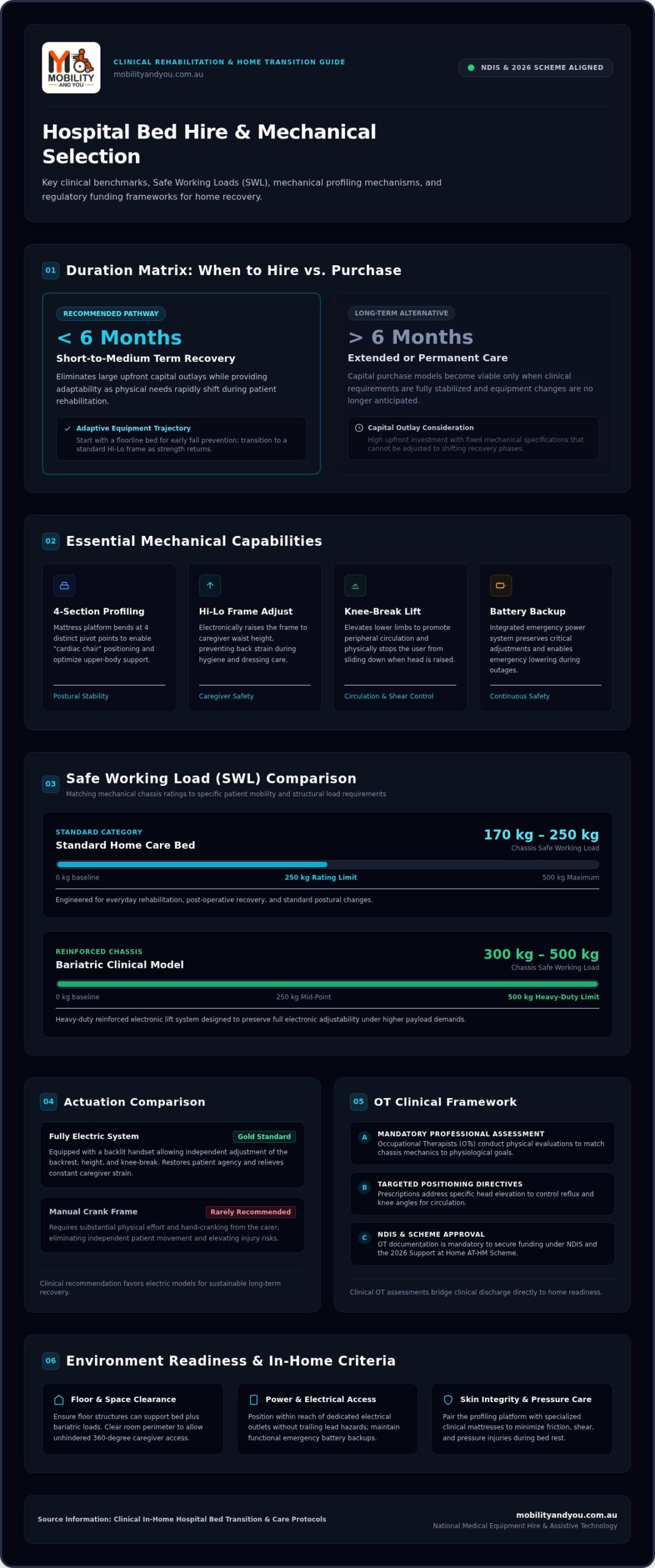
We often see families unsure whether to buy or rent. If your recovery period is expected to last less than six months, a hospital bed hire is usually the most practical path. It eliminates the need for a large upfront capital outlay while ensuring you always have access to the latest technology. We’ve found that needs can shift rapidly during rehabilitation. A patient might require a floorline bed initially to prevent fall-related injuries but later transition to a standard Hi-Lo model as their strength returns. Our equipment hire service allows for this flexibility, ensuring the equipment evolves alongside the patient’s progress.
The Role of the Occupational Therapist
Prescribing the right equipment isn’t just about comfort; it’s about clinical outcomes. We work closely with Occupational Therapists (OTs) to match the bed’s mechanical capabilities to the user’s specific physical requirements. An OT might identify a need for specific head elevation to prevent reflux or knee-break functions to promote circulation in the lower limbs. For those working through the NDIS or the Support at Home AT-HM Scheme, this professional assessment is mandatory to secure funding. This collaboration ensures every piece of equipment we deliver is perfectly suited to the user’s restorative pathway.
Selecting the Right Hospital Bed Features
Choosing the right equipment is about more than just picking a size; it’s about matching mechanical capabilities to specific physical needs. A 4-section profiling bed mechanism allows the mattress platform to bend in four distinct places. This flexibility is vital for maintaining a “cardiac chair” position or elevating the knees to prevent the user from sliding down when the backrest is raised. When you arrange a hospital bed hire, we ensure these mechanical functions align with the mobility goals set by your healthcare team.
The Hi-Lo function is perhaps the most critical feature for caregiver safety. By electronically raising the entire bed frame to waist height, carers can perform hygiene tasks or dressing without straining their backs. As noted in the Healthdirect guide to mobility aids, these adjustments are fundamental for supporting postural changes and preventing injury for those providing daily assistance. We also prioritize safety through integrated features like emergency battery backups, which ensure the bed remains functional during power outages so the user can always be moved to a safe position.
Weight capacity is another non-negotiable factor. Standard home care beds usually feature a Safe Working Load (SWL) between 170 kg and 250 kg. For users requiring more robust support, bariatric models are engineered to handle 300 kg to 500 kg while maintaining full electronic adjustability. Ensuring the bed matches the user’s weight and mobility level is the first step in creating a secure recovery environment.
Electric vs. Manual Adjustability
Manual beds are rarely recommended for modern home care because they require significant physical effort from the carer. Fully electric beds are the gold standard for independence. They allow users to adjust their own backrest, knee-break, and height via a simple, backlit handset. This autonomy reduces the constant need for carer intervention, giving the user a sense of agency that’s vital for their mental well-being during recovery.
Essential Pressure Care and Mattresses
The bed frame provides the structure, but the mattress protects the skin. For those with limited mobility, a standard foam mattress often isn’t enough to prevent complications. We offer a range of specialized surfaces, including high-specification foam, gel-infused layers, and active alternating-air systems. Pressure redistribution involves spreading body weight over a larger surface area to minimize localized stress on the skin and underlying tissues. Selecting the correct surface is the most effective way to prevent painful pressure injuries during extended periods of bed rest. If you’re unsure which level of support is required, you can explore our professional hospital bed hire solutions to find a package tailored to your clinical needs.
Navigating Hire Costs and Funding Options
Managing the financial side of recovery can feel overwhelming. We’re here to help you understand how a hospital bed hire fits into your broader care plan. One of the primary advantages of hiring is the inclusion of professional servicing and maintenance. Unlike a purchased bed, where the owner is responsible for all repairs, a hire agreement typically covers technical support and routine checks. This ensures the equipment remains compliant with safety standards without adding to your out-of-pocket expenses.
When comparing the total cost of ownership against long-term hire, consider the hidden values. Hiring provides a flexible solution that adapts to your recovery timeline. If your clinical needs change or if you need to upgrade to a different model, we can facilitate that transition without the burden of trying to sell an unwanted piece of furniture. You can find more about our Equipment Hire process to see how we streamline these logistics.
NDIS and My Aged Care Support
For participants of the National Disability Insurance Scheme, funding for a hospital bed hire often falls under “Core Supports” for short-term needs or “Capital Supports” for specialized, high-tier equipment. It’s essential to follow the NDIS guidelines on renting assistive technology to ensure your plan covers the necessary costs. For older Australians, the 2025/2026 reforms introduced the Support at Home Program. Under the new AT-HM Scheme, equipment grants are now managed separately from daily care budgets, allowing for faster access to essential aids. You can explore our NDIS Information page to learn more about how we support these funding pathways.
Hire Terms and Flexibility
Most commercial agreements include a minimum hire period, typically ranging from two to four weeks. This timeframe allows enough space for initial recovery while giving you the flexibility to extend as needed. You’ll also need to consider upfront logistics such as delivery, professional installation, and eventual collection. One of the greatest benefits is the “Try Before You Buy” opportunity. It allows you to test the specific features in your own home environment before committing to a permanent purchase. This ensures the final solution truly supports your independence.
How to Prepare Your Home for a Hospital Bed
Preparing your home for the arrival of medical equipment is a vital step in ensuring a safe, dignified recovery. When you arrange a hospital bed hire, you aren’t just adding a piece of furniture; you’re creating a clinical zone within a domestic space. This requires a thoughtful assessment of your room’s layout to accommodate both the user’s needs and the practical requirements of caregivers. We recommend starting this process well before the discharge date to avoid unnecessary stress during the transition. If you’re still exploring which model fits your specific requirements, you might find our guide on Choosing the Right Hospital Bed a helpful starting point.
Floor surfaces deserve special attention. A fully equipped medical bed, combined with the weight of the user, can easily exceed 250 kg. You’ll need to ensure the floor is level and structurally sound to support this concentrated weight. For those using mobile hoists or patient lifters, hard flooring like laminate or vinyl is often preferable to thick carpets, as it allows the equipment to glide smoothly without resistance. We also suggest measuring the width of doorways and hallways. Most standard frames require a clearance of at least 800 mm to 900 mm to navigate into the bedroom without damage to the property or the equipment.
Space and Access Requirements
A common mistake is pushing the bed against a wall to save space. We advise maintaining at least a 1-metre perimeter around the sides and foot of the bed. This clearance is essential for caregivers to perform hygiene tasks, facilitate transfers, and operate medical machinery like oxygen concentrators or feeding pumps. In wider healthcare environments, advanced transfer systems and bed movers from specialists like RIHA Industries help minimize manual handling strain, but in a home setting, sufficient spatial clearance remains your primary safeguard. It also ensures that if a hoist is needed, there’s enough room for the legs to spread for stability. Remember to clear the area of common trip hazards; remove loose rugs, tuck away stray cables, and ensure the path to the bathroom is wide and unobstructed.
Modern medical beds rely on consistent, safe electricity to operate their Hi-Lo and profiling functions. You’ll need an accessible, grounded wall outlet near the bed’s permanent position. We strongly advise against using extension cords or power boards, as these can easily become trip hazards or overheat under the draw of the bed’s motors. Surge protection is vital for safeguarding the sensitive electronic control units within medical beds against Australia’s unpredictable power fluctuations. If you’re unsure about your home’s suitability, we’re here to help. You can contact our team for a home assessment to ensure your setup is safe and compliant before delivery.
Reliable Hospital Bed Solutions with Mobility and You
At Mobility and You, our mission centers on restoring the dignity and autonomy of every individual we serve. We recognize that hospital bed hire is often the first step in a broader recovery plan, and we’re committed to making that step as seamless as possible. Because we specialize in both sales and technical equipment maintenance, our hire fleet is kept in peak clinical condition, meeting the same rigorous standards we apply to our new inventory. This dual expertise means you aren’t just renting a bed; you’re gaining a partner who understands the technical intricacies of every motor, frame, and mattress surface.
Choosing to hire from a specialist provider ensures that your equipment isn’t just functional, but optimized for your specific recovery goals. We don’t believe in transactional service. Instead, we focus on building long-term relationships through personalized care and expert advice. Whether you’re navigating the NDIS or managing a private recovery, we provide the technical foundation you need to focus on healing.
Professional Delivery and Installation
When our technicians arrive at your home, they do more than just deliver equipment. They provide a comprehensive white-glove installation service, ensuring the bed is positioned correctly and all electronic functions are tested in situ. We take the time to conduct a hands-on demonstration for both the user and their caregivers, covering everything from handset operation to the safe use of locking castors. For those looking for a more permanent or holistic bedroom setup, we also offer Adjustable Bed Packages that combine clinical functionality with a home-like aesthetic.
Ongoing Support and Maintenance
Peace of mind shouldn’t end once the delivery truck leaves. Our national capability ensures that if a technical issue arises, our responsive Servicing and Repairs team is ready to assist. We perform regular safety checks and preventative maintenance to ensure the equipment remains reliable throughout your hire period. At the conclusion of your recovery, we handle the collection and follow strict, hospital-grade sanitization protocols to prepare the equipment for its next use. This thorough approach ensures every hospital bed hire we facilitate meets the highest standards of hygiene and mechanical safety.
Starting your journey is as simple as a conversation. We invite you to contact us for a personalized consultation to discuss your clinical needs, funding options, and home setup requirements. Together, we’ll find a solution that prioritizes your comfort and supports your path to independence.
Empowering Your Path to Independence
A successful transition from hospital to home relies on more than just equipment; it’s about creating a safe, supportive environment that prioritizes your dignity. We’ve explored how matching clinical features like Hi-Lo functionality to your specific needs can transform the recovery experience. By leveraging the 2026 Support at Home reforms or NDIS funding, you can access high-quality solutions without the stress of long-term financial commitments. Choosing hospital bed hire gives you the flexibility to adapt as your strength returns, ensuring you always have the right level of support during every phase of healing.
As an NDIS Registered Provider, we take pride in offering leading brands backed by our specialist servicing and repair team. We’re here to handle the technical details, from professional installation to ongoing safety checks, so you can focus entirely on your well-being. Our goal is to ensure you feel understood and supported every step of the way, providing the technical expertise needed for a seamless transition.
Ready to take the next step toward a comfortable home recovery? View our hospital bed hire options and start your recovery today. We look forward to being your trusted partner in restoring your movement and agency.
Frequently Asked Questions
Is it better to hire or buy a hospital bed for home use?
Hiring is often the superior choice for short-term recovery periods spanning less than six months. It allows you to avoid a significant upfront capital investment while ensuring you have access to the latest medical technology. If your clinical needs evolve during rehabilitation, you can easily swap models to suit your progress. For permanent or long-term chronic conditions, purchasing might be more cost-effective. We suggest discussing your expected recovery timeline with your healthcare team to make the most informed decision.
Does the NDIS cover the cost of hospital bed hire?
Yes, the NDIS provides funding for hospital bed hire through both Core and Capital support budgets. As a registered provider, we work closely with participants to ensure the equipment meets the specific goals outlined in their plans. You’ll typically need a clinical justification from an Occupational Therapist to confirm the bed’s features are necessary. This ensures the funding is allocated correctly while providing you with the technical support and maintenance required for a safe home environment.
Can I hire a hospital bed for just one week?
While we offer flexible terms, most hire agreements involve a minimum period of two to four weeks. This timeframe is designed to cover the initial acute recovery phase following a hospital discharge, which is often the most critical period. If you find you need the equipment for longer than originally planned, extensions are simple to arrange. Short-term hire serves as a tactical bridge, providing peace of mind without the commitment of a permanent purchase when recovery timelines are uncertain.
What kind of mattress comes with a hired hospital bed?
Standard hire packages usually include a high-specification foam mattress designed for basic pressure redistribution. However, we understand that skin integrity is a priority for those with limited mobility. You can choose to upgrade to specialized surfaces, such as gel-infused foam or active alternating-air systems, depending on your clinical risk level. We recommend consulting with your Occupational Therapist to determine which mattress technology will best prevent pressure injuries during your period of extended bed rest and recovery.
Will a hospital bed fit into a standard Australian bedroom?
Most medical-grade beds are designed to fit within a standard Australian bedroom, though they’re slightly larger than a traditional single bed. A King Single frame, for example, typically measures around 107 cm by 215 cm. It’s important to measure your doorway and hallway clearances before delivery to ensure a smooth installation process. We also suggest removing non-essential furniture to create a clear, accessible zone that supports both the user’s movement and the caregivers’ daily nursing tasks.
How much space is needed around a hospital bed for a hoist?
To operate a mobile hoist safely, you generally need a clearance of 1 to 1.5 metres on at least one side of the bed. This space allows the hoist’s base to spread for maximum stability during patient transfers. It also provides enough room for caregivers to position the equipment without bumping into walls or other furniture. Ensuring this perimeter is clear of rugs and cables is a vital safety step for any home care environment using mechanical lifting aids.
What happens if the hired hospital bed stops working?
If your equipment experiences a technical fault, our specialist servicing and repair team will prioritize a resolution. One of the primary benefits of hospital bed hire is that maintenance and repairs are typically included in your agreement. You won’t have to worry about finding a technician or paying for replacement parts yourself. We understand that consistent equipment performance is essential for your safety, so we aim to provide responsive support to keep your home recovery on track.
Do I need a doctors referral to hire a hospital bed?
You don’t need a formal doctor’s referral to hire a bed privately. However, if you’re seeking government funding through the NDIS or My Aged Care, a clinical assessment by an Occupational Therapist or Physiotherapist is mandatory. These professionals provide the necessary justification to ensure the equipment is medically appropriate for your specific condition. If you are setting up broader in-home support, you can explore Aged Care Services to see how registered providers assist with care coordination. Even for private hire, we often recommend a professional consultation to ensure you’re selecting the features that will best support your independence and long-term comfort.