The right disability equipment supplier isn’t necessarily the one with the biggest catalogue. Focus on whether the equipment and ongoing support fit the person’s everyday routine, not just whether a product looks suitable on paper.
It’s understandable to feel unsure about which option will be comfortable, practical and appropriate. A mobility scooter, wheelchair, walker or bathroom aid can support different activities, and choosing may involve weighing up buying against hiring. An occupational therapist or another relevant professional can help assess individual suitability. A supplier can explain product options and the services it offers.
This guide explains how to identify equipment categories to explore and compare suppliers’ hire terms, servicing, repairs and ongoing support. It also covers questions to ask before deciding, so you can make an informed choice with the person’s comfort and independence in mind.
Key Takeaways
- Start with daily routines, surroundings and goals to identify which equipment categories may be worth exploring.
- Ask suppliers to explain equipment options, fit and practical features in plain language.
- Compare buying, hiring and servicing together. Clarify hire terms, equipment availability and the support offered after purchase.
- Consider comfort, ease of use, environment and support needs, rather than relying on specifications alone.
- Prepare a clear description of the tasks the person wants help with, and discuss suitability with an appropriate professional where needed.
Choosing a Disability Equipment Supplier: Start With Everyday Needs
Choosing equipment can feel personal and unfamiliar, particularly when it may affect comfort, confidence and independence. Start with the person, not a product catalogue or diagnosis. Consider their daily routines, where the equipment needs to work and what they hope to do more independently. A diagnosis alone doesn’t determine which equipment will be suitable. People with the same condition can have different abilities, preferences and environments.
A disability equipment supplier provides equipment and related support, such as hire, servicing or repairs, to help people meet practical needs in everyday life. The scope of assistive technology (AT) ranges from simple aids to more complex devices. Describe the task the person wants to manage rather than assuming one particular product is the answer.
Which daily activities should guide your equipment search?
Think about where support may be useful: moving around indoors, accessing outdoor spaces, transferring between a chair and bed, bathing, or resting comfortably. What feels difficult now? What would the person like to do with greater ease or independence? Include the equipment user in the conversation, along with family or a support person if they wish. An occupational therapist or another relevant clinician may also help assess individual needs and suitability.
Which equipment categories might be relevant?
Mobility equipment serves different purposes. Scooters may suit some outdoor journeys, while power chairs provide powered mobility in other circumstances. Wheelchairs support seated mobility, and walkers can offer support while walking. The right option depends on the person’s abilities, intended use and surroundings, not simply their diagnosis.
Needs at home may point to other categories. Lift chairs can support sitting and standing, adjustable beds offer changes to resting position, and bathroom aids or daily living aids can assist with specific tasks. For an initial overview, explore the available mobility scooter and powered mobility guides. Then discuss relevant options with an appropriate clinician where needed. A supplier can explain its products and support, but that conversation isn’t a substitute for clinical assessment.
How to Assess a Disability Equipment Supplier Before Choosing
A structured conversation can help you compare options without needing specialist terminology. Explain the task the person wants to manage, ask which equipment categories may be relevant, check how a particular model fits their needs, and clarify what support is available. Then take time to decide whether to proceed. A suitable product should match the user’s routine, environment and ability to operate it.
What questions help establish whether a product is suitable?
Ask about details that affect real-world use. For a particular model, clarify its dimensions and weight capacity, how its controls work, and what operating requirements the user should understand. Rather than asking only for specifications, explain the situation: “Will it fit through this doorway?” or “Can the user operate these controls comfortably?”
Consider the whole process, not just the equipment. Where will it be used and stored? Does it need to be charged, lifted or transported? How will the person get on and off it, or transfer between it and another seat? If posture, transfers or other clinical needs are involved, seek assessment from an appropriate clinician. A supplier can explain product information, but shouldn’t replace professional input about clinical suitability.
What should a clear supplier conversation include?
Ask the supplier to explain relevant alternatives and practical trade-offs in plain language. A feature may affect ease of operation, comfort, storage or transport. Invite the user to describe what matters most and ask questions. A useful discussion should clarify what each option is designed to do, which details still need checking and what support the supplier offers.
If seeing or trying equipment would help, ask whether a demonstration is available and what arrangements apply. Confirm delivery and setup details directly with the supplier rather than assuming they’re included. The Australian Government’s Disability Gateway guide to aids and equipment is another starting point for exploring equipment and related programs.
Once you have a clearer picture of the person’s needs, explore equipment categories as a starting point for further questions, not as a substitute for discussing fit and use. Before deciding, make sure you understand the product’s relevant features and any support arrangements that matter to the user.
Buying, Hiring and Aftercare: Compare the Full Support Offer
Product fit is only part of the decision. Compare how you’ll access the equipment and what support may be available later. Consider whether buying, hiring or arranging servicing best fits the person’s circumstances and expected use. The right option may change if needs are temporary or still evolving.
| Option | May suit when | What to clarify |
|---|---|---|
| Buying | The equipment is expected to meet an ongoing need. | Confirm product suitability, what’s included and what servicing or repair support is available. |
| Hiring | The need may be temporary, or the person wants to explore an option before making a longer-term decision. | Check equipment availability, hire duration, condition, terms and included support. |
| Servicing and repairs | Equipment already in use needs maintenance or attention. | Ask whether the specific item is supported, how to request service and what the process involves. |
When might hiring equipment be worth considering?
A short-term recovery, changing needs or uncertainty about longer-term use may make hiring worth discussing. It can provide access to equipment without committing to a purchase, but suitability depends on the person and available options. Ask how long the hire can run, what support is included and how the equipment’s condition is checked. Confirm current categories, availability and terms directly with the supplier. You can review equipment hire information as part of that conversation.
What should you ask about servicing and repairs?
Servicing matters when equipment plays a regular role in daily routines. Ask which types of equipment the supplier services and whether the specific item is supported. Find out how to request a repair, whether the equipment needs to be assessed first, and what servicing involves. Don’t assume response times, loan equipment or warranty coverage; ask what applies to your circumstances. Mobility and You offers equipment servicing and repairs. Confirm whether support is available for the item in question.
Compare the answers as one support picture: the equipment, how you’ll access it and the aftercare. Clear terms help you understand what to expect before deciding. Don’t assume that a hire arrangement or service applies to every product.
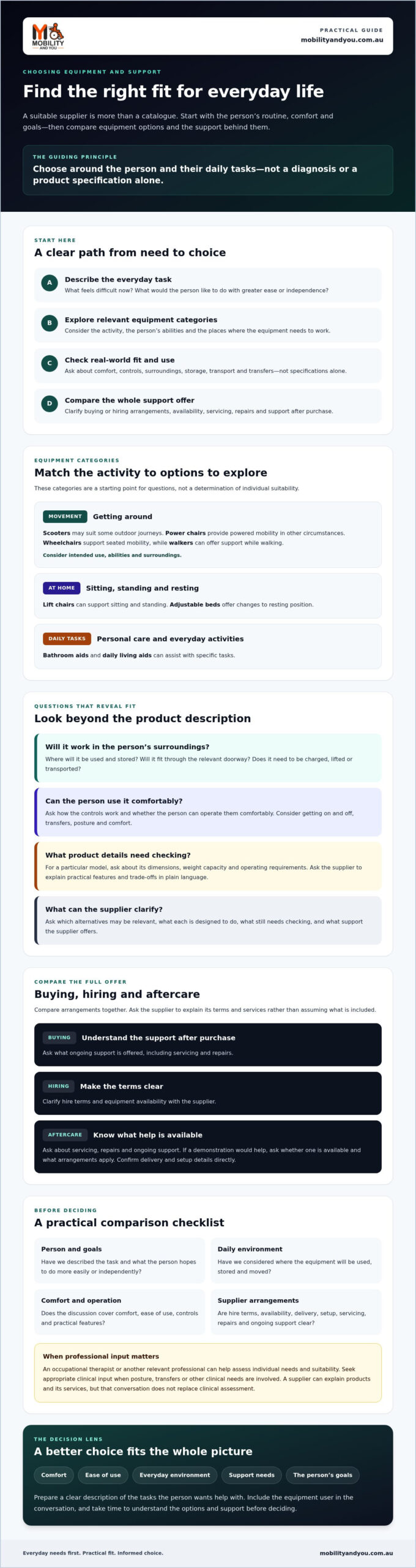
A Practical Checklist for Comparing Disability Equipment Options
A comparison is most useful when it reflects how the equipment will actually be used. A long feature list or more complex product isn’t automatically a better fit. Before comparing products or speaking with suppliers, write down the tasks the person wants to manage, what matters most to them and any practical limits at home or on the go.
Use this checklist to keep the discussion focused:
- Function: What task should the equipment make easier?
- Comfort: Does the person feel supported and comfortable during the intended use?
- Usability: Can they manage the controls or operate the equipment as needed?
- Environment: Will it fit the spaces, access points and surfaces where it will be used?
- Support: What cleaning, storage and maintenance does the specific product require?
Connect each specification to a practical question. Dimensions matter if space is limited; controls matter if the user needs to operate the equipment independently. Ask the supplier to explain features in everyday language and note any points that need professional input.
Which practical features deserve a closer look?
For mobility equipment, ask about controls, manoeuvrability, seating and the type of use the equipment is intended for. For equipment used at home, consider available space, access, transfers and how the item fits into daily routines. Check the product-specific requirements for cleaning, storage and maintenance. A feature is valuable when it supports the person’s actual use, not simply because it appears on a specification sheet.
How can family members and clinicians support the decision?
Where possible, let the equipment user lead the conversation and express their preferences. Family members or support people can help record observations and questions. An occupational therapist can advise on needs that require professional assessment. If comparing powered mobility, use a powered wheelchair guide to develop questions, not as a substitute for assessing individual suitability.
Bring your notes when you speak with a supplier. Record where the equipment will be used, what feels difficult, which features matter and what remains uncertain. To explore available equipment categories, browse the equipment range and use your checklist to guide further questions.
What to Expect When You Contact a Disability Equipment Supplier
An enquiry is an opportunity to explain what the person wants to do more comfortably or independently, then ask which equipment categories and supplier services may be relevant. You don’t need to arrive with a product already chosen. A supplier can describe its equipment range and discuss options such as hire, servicing and repairs, but availability and suitability depend on the specific item and circumstances.
A diagnosis by itself isn’t a product recommendation. Two people with the same diagnosis may have different routines, abilities, preferences and home environments. Where clinical, postural or transfer needs require assessment, seek advice from an appropriate clinician. A supplier conversation can then help clarify product details and practical support.
What information should you prepare before making an enquiry?
A few notes can make the discussion more useful. Include the equipment user’s priorities and, wherever possible, invite them to describe what matters most. You might prepare:
- The daily activities they want help with, and what feels difficult now.
- Where the equipment may be used, including access or space considerations.
- Any transport or storage requirements, along with comfort or usability concerns.
- Relevant clinician recommendations or measurements, if already available.
- Questions about demonstrations, hire terms, servicing and repairs.
These details help focus the conversation on practical needs rather than technical language alone. If something is unclear, ask the supplier to explain it in everyday terms and confirm what applies to the specific product.
How can you take the next step with confidence?
Use the enquiry to clarify which options the supplier can discuss, whether relevant equipment is available and what support may apply. Mobility and You supplies mobility and daily living equipment and offers hire, servicing and repairs. Ask about the specific category and terms rather than assuming every option is available or suitable. If funding is part of your decision, check current NDIS eligibility and requirements through the relevant official channels.
You don’t need to decide during an initial conversation. Take time to consider the answers, involve the equipment user and a relevant clinician where appropriate, and follow up on unanswered questions. To review the range before making an enquiry, explore mobility and daily living equipment as a starting point for discussion.
Choose Support That Fits Your Everyday Life
The right equipment choice starts with the person’s routine, environment and goals. Compare options by how they work in daily use, how comfortable and manageable they feel, and what support is available afterwards. A product category or diagnosis alone can’t determine what will suit an individual. Seek input from an appropriate clinician when professional assessment is needed.
Look beyond the initial purchase, too. Mobility and You supplies a range of mobility and daily living equipment, with hire options for short-term or long-term needs, as well as servicing and repair support. Ask about the specific equipment, current hire terms and relevant aftercare to understand what may be available for your circumstances.
When you’re ready, explore equipment and discuss what may suit your needs. Take your questions at your own pace, and ask about the products and support relevant to your situation.
Frequently Asked Questions
What should I look for in a disability equipment supplier?
Look for a supplier that can explain relevant equipment options clearly and answer questions about fit, hire, servicing and repairs. While organisations such as Novus Medical distribute specialised medical devices and healthcare products on a broader scale, local disability equipment providers focus on tailored community aids. Ask whether it supports the specific product you’re considering and what its service terms include. Use the same questions with each provider so you can compare their support consistently. For clinical or postural suitability, seek advice from an appropriate clinician rather than relying on a product description alone.
Can I hire disability equipment before deciding whether to buy?
Hiring may be an option for temporary needs or while you consider whether a product suits longer-term use. Availability depends on the equipment and the supplier’s current terms. Before committing, ask how long the hire can run, what condition the equipment is in, what support is included and whether the specific category is available. Mobility and You offers hire options for short-term or long-term needs. Confirm categories and terms directly.
How do I know which mobility equipment is right for me?
Start with the activities you want to manage, where you’ll use the equipment and what you can operate comfortably. A scooter, power chair, wheelchair or walker may suit different mobility needs, but no category is right for everyone. Ask about the particular model’s controls, dimensions, seating and intended use. If your needs involve posture, transfers or other clinical considerations, consult an occupational therapist or another relevant clinician before deciding.
Does a disability equipment supplier provide servicing and repairs?
Some suppliers offer servicing and repairs, but the equipment they support and the process can differ. Mobility and You provides equipment servicing and repair support. Ask whether the specific item can be serviced, how to request repairs, what assessment may be needed and what the work involves. Confirm any applicable terms directly, including whether the supplier supports equipment purchased elsewhere. Don’t assume particular response times, warranty coverage or temporary replacement equipment is included.
Can the NDIS help pay for disability equipment?
The NDIS may fund assistive technology when it meets current funding requirements and is included in, or approved under, the participant’s plan arrangements. Funding isn’t automatic, and the process can depend on the item, its cost and the participant’s circumstances. Check current NDIS guidance or speak with your planner or support coordinator before purchasing. Confirm any assessment, documentation or approval requirements first, and don’t rely on a supplier’s product information as confirmation of eligibility.
Should I ask an occupational therapist before choosing equipment?
An occupational therapist can help assess whether equipment is appropriate for a person’s functional, postural or transfer needs. Their input may be particularly useful if the choice involves complex requirements or uncertainty about safe use. A supplier can explain product features, available options and relevant support, but that’s different from a clinical assessment. If you already have an OT recommendation, share it with the supplier and ask how the equipment under consideration relates to it.
What information should I bring when contacting an equipment supplier?
Prepare a brief description of the activities the person wants help with, where the equipment will be used, and any access, storage or transport concerns. Note comfort preferences and questions about product features, hire, demonstrations, servicing or repairs. Bring relevant clinician recommendations or measurements if available. You don’t need to know the exact product name; explaining the everyday task and the person’s priorities gives the supplier a useful starting point.