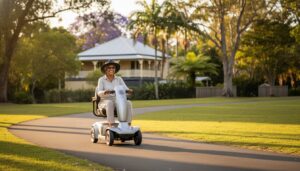
Last Tuesday, 72-year-old Margaret from Brisbane watched her neighbors walk to the local shops while she stayed behind, worried her heavy, outdated frame wouldn’t handle the uneven footpath. We know that the fear of a fall can make your world feel smaller every day. It’s frustrating when equipment feels like a burden rather than a help, especially when you’re unsure if NDIS or Aged Care funding can assist with the cost. Our team at Mobility and You believes you deserve a 4 wheeler mobility walker that feels like a natural extension of your body.
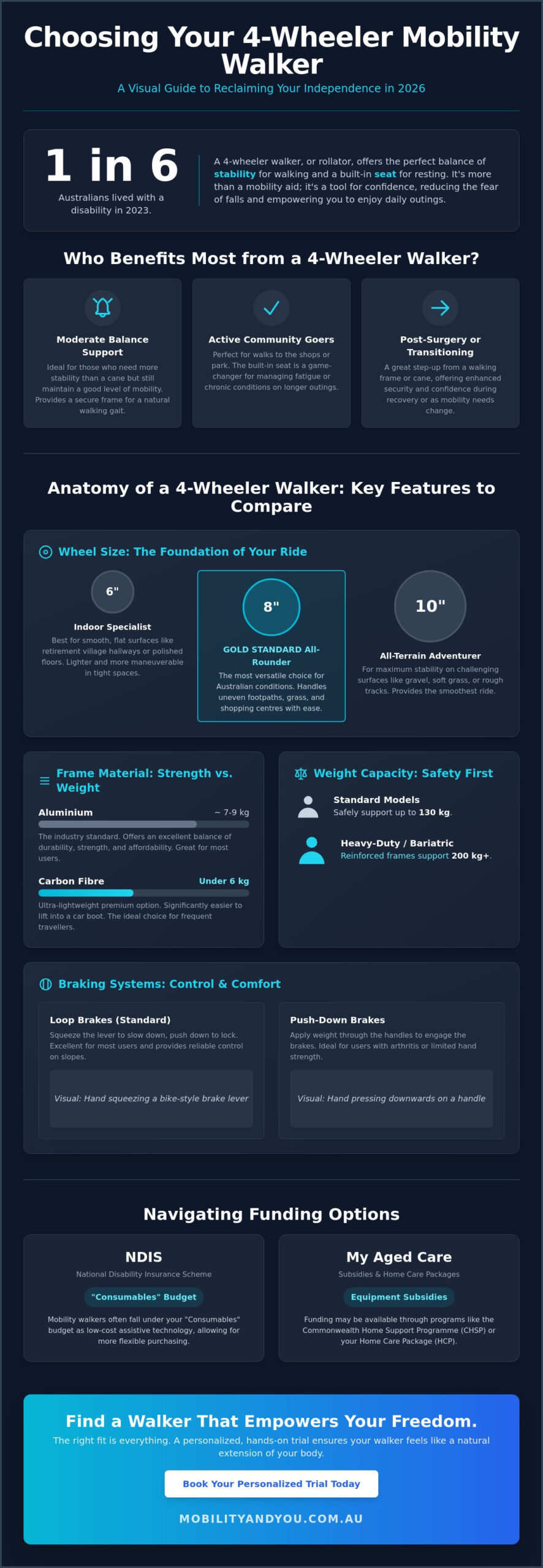
We’ll show you how to select a lightweight, foldable model that fits your height perfectly and restores your daily freedom. With one in six Australians living with a disability as of 2023, finding the right support is a common journey we take together. This guide explores the best 2026 features, explains the NDIS registration process, and helps you find a seat that provides real pressure care and comfort for your morning outings.
Key Takeaways
- Understand how a rollator provides the perfect balance of stability and comfort with integrated seating for your daily outings.
- Learn why selecting a 4 wheeler mobility walker with 8-inch wheels is the gold standard for navigating diverse Australian outdoor conditions safely.
- Compare ultra-lightweight frames for easy car travel against heavy-duty all-terrain models built for more active outdoor adventures.
- Navigate the complexities of NDIS “Consumables” budgets and My Aged Care subsidies to help offset the cost of your mobility equipment.
- Discover the value of a personalized, hands-on trial with our family-owned team to find a solution that truly empowers your freedom.
Understanding the Benefits of a 4 Wheeler Mobility Walker
A 4 wheeler mobility walker, often referred to as a rollator, is more than just a piece of equipment; it’s a gateway to reclaimed independence. Unlike three-wheeled versions that prioritize a tight turning radius or standard frames that require a lift-and-place motion, the four-wheel design focuses on maximum stability. Our team’s found that this configuration provides a consistent point of contact with the ground, which is essential for users who feel vulnerable to stumbles. By choosing a 4 wheeler mobility walker, you’re investing in a tool that supports a fluid, natural gait while reducing the physical load on your upper body.
The psychological impact of these devices shouldn’t be underestimated. Anxiety about falling often keeps people confined to their homes, yet the presence of a sturdy frame can reduce this fear significantly. We see a marked increase in confidence when clients realize they have a “safety net” always within reach. The integrated seat is the standout feature here. If you’re walking to the local shops and feel your energy flagging, you can simply lock the brakes and take a rest. This feature is a game-changer for those managing heart conditions or chronic fatigue. For a broader look at the history and variety of these tools, you can explore the evolution of mobility walkers to see how they’ve been refined over the decades to prioritize user dignity.
Who is a 4-Wheel Walker Best Suited For?
Indoor vs. Outdoor Performance
The Australian environment presents unique challenges, from cracked suburban footpaths to the soft grass of a local park. A 4 wheeler mobility walker excels outdoors because its wide base of support handles uneven surfaces better than narrower frames. The heavy-duty braking systems are designed to provide control on inclines, ensuring the walker doesn’t roll away on a slope. Indoors, while the footprint is larger than a 3-wheeler, most modern models are designed to clear standard 820mm Australian doorways. We suggest checking your hallway widths before purchasing to ensure the turning circle fits your home’s layout. You can view our full range of options at our online shop to compare specific dimensions and weight capacities.
Key Features to Compare When Choosing a Seat Walker
Selecting the right 4 wheeler mobility walker is a personal decision that directly impacts your daily confidence and freedom. We believe that the best equipment should feel like a natural extension of your body, providing support without becoming a burden. Our team focuses on several technical specifications to ensure the walker you choose aligns with your lifestyle and physical needs.
- Wheel Size: In Australia, 8-inch wheels have become the gold standard for versatility. While smaller wheels are lighter, they often catch on the 15mm expansion joints common in local footpaths and shopping centre entries.
- Frame Material: Most users opt for aluminium due to its balance of strength and affordability. Carbon fibre is a premium alternative, often weighing under 6kg, which is ideal if you frequently lift your walker into a car boot.
- Braking Systems: Standard loop brakes are excellent for most, but we often recommend push-down brakes for clients with advanced arthritis who may struggle to squeeze a lever.
- Weight Capacity: Safety is our priority. Standard models typically cater to weights up to 130kg, while bariatric or heavy-duty versions are reinforced to support 200kg or more safely.
The Importance of Wheel Diameter and Tread
The environment where you spend most of your time should dictate your wheel choice. 6-inch wheels are excellent for indoor use, especially in retirement villages with tight hallways or polished floors. If you plan to navigate grass, gravel, or the uneven pavements found in older Australian suburbs, 8-inch to 10-inch wheels provide much better stability. Larger wheels reduce the chatter felt through the handles.
Ergonomics: Handles, Seats, and Backrests
Achieving a custom fit is essential to avoid shoulder or back pain. To measure handle height, stand straight and let your arms hang; the handles should meet your wrist crease. Padded seats offer comfort for longer rests, while sling seats allow for a tighter fold. Height-adjustable frames ensure your 4 wheeler mobility walker provides the best ergonomic support. As an NDIS registered provider, we help you select a model that meets these clinical requirements while maximizing your independence. For users who are transitioning from other mobility aids, our guide on forearm crutches vs underarm crutches can help you understand how different aids support posture and long-term recovery.
A Roundup of 4 Wheeler Mobility Walker Categories for 2026
Every person’s journey with mobility is unique. In 2026, the technology behind a 4 wheeler mobility walker has advanced to offer highly specialized solutions that go far beyond basic support. We see four primary categories that cater to different lifestyles and physical requirements, ensuring you don’t have to compromise on your daily activities. Our team focuses on matching the right frame to your specific environment and physical needs.
- Ultra-Lightweight Rollators: These frames often weigh less than 6kg. They’re the perfect choice if you frequently travel by car or need to lift the walker into a bus or train independently.
- Bariatric Walkers: These offer reinforced frames and wider seats for maximum safety. They typically support weight capacities up to 225kg while maintaining smooth maneuverability.
- Transit Rollators: This versatile 2-in-1 design allows the device to convert into a transport chair. It’s an ideal solution for long outings where you might need a rest and have a companion available to push.
Top Picks for Portability and Travel
Most modern travel-friendly models now utilize a cross-fold mechanism. This design allows the walker to fold side-to-side rather than front-to-back. It means the frame can remain upright and stable even when tucked away in a hallway or restaurant. You should look for models with removable storage bags and clip-on accessories. These features make airport security or car loading much simpler. If you’re planning a holiday or visiting family, our Mobility Equipment Hire services offer a convenient way to access high-quality travel walkers without a permanent purchase. For those recovering from a lower-leg injury who need a temporary mobility solution, our walker hire Brisbane guide covers how to choose the right equipment to stay mobile during your recovery.
Specialist Walkers for Specific Health Conditions
Navigating NDIS Funding and Maintenance for Your Walker
Our team knows that securing the right 4 wheeler mobility walker involves more than just selecting a model. It’s about understanding the financial pathways available to you in the Australian healthcare system. We believe that everyone deserves to move with confidence, and we’re here to help you navigate the administrative side of independence. In Australia, these walkers are typically categorized under “Assistive Technology” (Level 1) or “Consumables,” depending on your specific plan goals and the device’s cost. If your equipment is priced under A$1,500, it usually falls into the low-risk AT category, which simplifies the procurement process significantly.
Accessing NDIS and Government Support
We recommend starting with a formal quote to present during your NDIS plan review. This ensures your funding aligns with your mobility needs. Working with an NDIS registered provider offers peace of mind because we adhere to strict quality and safety standards. For those over 65, My Aged Care provides subsidies through the Commonwealth Home Support Programme (CHSP) or Home Care Packages (HCP). These programs help reduce out-of-pocket expenses, making high-quality equipment accessible. You can find detailed guidance on our NDIS Information page to help you start this journey. Our specialists can help you understand how to use your budget effectively to prioritize your safety and comfort.
Maintaining Your Walker for Longevity
A 4 wheeler mobility walker is a mechanical tool that requires regular attention to remain safe. Professional assembly is the first step. Our technicians ensure the handle height is perfectly tuned to your wrists, preventing shoulder strain and promoting upright posture. You should perform monthly checks on brake cable tension and bolt tightness. If you live near the coast, salt air can lead to corrosion; wiping the frame with a damp cloth weekly removes grit and protects the finish. It’s a simple habit that adds years to the life of your frame.
When you notice the brakes feel “spongy” or the tyre tread looks smooth, it’s time for a professional check-up. We provide expert care through our Servicing and Repairs department to keep your equipment in peak condition. Regular maintenance isn’t just about the machine; it’s about your safety. We check the following during a standard service:
- Brake Responsiveness: Ensuring the locking mechanism holds firm on inclines.
- Tyre Integrity: Checking for wear patterns that might indicate alignment issues. Just as you might visit Partner Tires for expert vehicle tire care, keeping your walker’s wheels in top shape is vital.
- Fasteners: Tightening all nuts and bolts that naturally loosen with vibration.
- Folding Mechanism: Lubricating joints to ensure ease of transport.
If you’re unsure which funding path applies to your situation or if your current equipment needs a safety check, contact our friendly team for a personalized consultation today.
Why Choose Mobility and You for Your Walking Aids
Selecting a 4 wheeler mobility walker is a deeply personal decision that directly impacts your daily freedom. At Mobility and You, we treat this choice with the clinical importance it deserves. We’re a family-owned Australian business, and our team doesn’t just see a customer; we see a neighbor who deserves to move with dignity and safety. We’ve built our reputation on a “local heart” and professional expertise, ensuring every piece of equipment we provide serves your unique physical requirements.
Our commitment goes beyond a simple transaction. We match the latest mobility technology to your specific lifestyle. Whether you need a lightweight frame for frequent travel or a robust bariatric model for extra stability, we guide you through the technical specifications. We prioritize your independence, ensuring you feel empowered rather than overwhelmed by your choices.
Trial Before You Buy: The Showroom Experience
Testing equipment in a controlled environment is vital for long-term comfort. Our showroom allows you to test a 4 wheeler mobility walker on various surfaces, including smooth tiles and simulated outdoor paths. This hands-on approach ensures the braking system and grip comfort meet your expectations before you commit to a purchase.
- Professional Fitting: Our experts adjust handle heights and seat positions to your frame. Clinical data suggests that improperly fitted walkers can increase the risk of secondary strain injuries by up to 22%.
- Surface Testing: Experience how different wheel sizes handle transitions between floor types.
- Expert Guidance: Our staff explains the nuances of each model, from turning circles to folding mechanisms.
You can learn more about our team’s philosophy and our dedicated approach to client care on our about page.
Comprehensive Post-Purchase Care
Our relationship doesn’t end when you leave the store. We provide a “service for life” approach to every piece of equipment we sell. This includes a dedicated servicing and repair department to handle wear and tear, ensuring your walker remains safe for years to come. We also offer a wide array of specialized accessories to enhance your experience, such as:
- Cane and crutch holders for multi-aid users.
- Oxygen bottle carriers for respiratory support.
- Customizable storage bags and baskets for shopping trips.
As an NDIS registered provider, we’re well-versed in the administrative requirements of government schemes, helping you secure the equipment you need without the stress. Contact our friendly team today for personalized advice and start your journey toward improved mobility with a partner you can trust.
Take the Next Step Toward Your Independent Lifestyle
Choosing the right 4 wheeler mobility walker involves more than just picking a model; it requires finding a tool that aligns with your specific mobility goals and physical needs. Whether you’re looking for advanced braking systems or bariatric support, the 2026 range offers more versatility than ever before. It’s essential to consider how features like seat height and wheel durability will impact your daily comfort and safety during every outing.
Browse our full range of 4-wheeler walkers and rollators
We’re ready to help you rediscover your freedom and stay active with confidence.
Frequently Asked Questions
How do I know what size 4 wheeler mobility walker I need?
You need to measure the distance from the floor to your wrist crease while standing naturally with your shoes on. This measurement ensures the handles sit at a height that allows for a slight bend in your elbow. Our team finds that a 15 to 30 degree elbow flexion provides the best support and posture. Choosing the correct 4 wheeler mobility walker size prevents back strain and ensures you can walk with confidence and dignity.
Can I use a 4-wheel walker as a wheelchair if I get tired?
No, you shouldn’t use a standard 4 wheeler mobility walker as a transport chair unless it’s specifically a hybrid model. Standard walkers don’t have the frame reinforcement or footrests required to safely move a seated person. According to 2025 safety guidelines, using a walker as a wheelchair accounts for a high percentage of tipping accidents. If you need to be pushed, we recommend a dedicated 2-in-1 rollator-wheelchair designed for that purpose.
Will my 4-wheeler walker fit in the boot of a small car?
Most modern 4-wheel walkers fold to a compact width of approximately 25cm, allowing them to fit easily into the boot of a small car like a Toyota Corolla. Many high-quality models now feature a side-folding mechanism that stays upright when closed. These lightweight aluminium frames usually weigh between 6kg and 8kg. This makes it much easier for you or your carer to lift the unit without physical strain.
What is the difference between a rollator and a mobility walker?
A rollator is a frame equipped with four wheels, a seat, and handbrakes, while a traditional mobility walker often has no wheels or only two front wheels. In the Australian healthcare market, people often use these terms interchangeably. However, a rollator is specifically designed for those who have the balance to navigate a rolling device. It offers more freedom and a built-in place to rest during longer walks or shopping trips.
How much weight can a standard 4-wheel walker hold?
A standard 4-wheel walker typically supports a maximum user weight of 130kg. For individuals who require more robust support, bariatric models are engineered to hold between 200kg and 250kg. Every product we supply meets strict Australian Standards, including ISO 11199-2:2005. It’s vital to check the specific weight rating of your chosen model to ensure it provides the stability and safety you deserve for your daily independence.
Does the NDIS cover the full cost of a mobility walker?
The NDIS often covers the full cost of a walker if it’s identified as a “reasonable and necessary” support in your plan. As an NDIS registered provider, we’ve helped many participants access funding through their Core Supports or Capital Support budgets. You’ll generally need a recommendation from an Occupational Therapist to justify the specific model. Our team works closely with your coordinators to ensure the administrative process is as smooth as possible.
How often should I have my mobility walker serviced?
We recommend a professional service every 12 months to check brake cables, tyre wear, and bolt tightness. If you use your equipment daily in outdoor environments, a quick self-check every 30 days is a smart habit. Look for frayed cables or loose handles that might compromise your safety. Regular maintenance ensures your walker remains a reliable partner in your mobility journey and extends the life of your investment significantly.
Are 4-wheel walkers safe to use on grass or gravel?
Standard 4-wheel walkers are safest on flat, firm surfaces, but models with large 20cm or 25cm wheels handle grass and gravel quite well. Smaller wheels often get stuck in 40% of uneven outdoor terrains found in Australian parks. If you enjoy being active outdoors, look for a model with pneumatic or soft-roll tyres. These features absorb shocks and provide much better traction on surfaces that aren’t perfectly smooth or paved.