A wheelchair fault doesn’t always mean the repair needs to happen at home. Mobile servicing and workshop repairs are two practical options for manual and powered wheelchairs. The right setting depends on the fault and the work required.
When equipment you rely on isn’t working as it should, it helps to know what happens next. This guide explains how mobile and workshop repairs differ, which issues each can address, and how servicing can help keep a wheelchair functioning as intended.
You’ll also learn what details to provide when describing a fault and what to expect during a repair. With that information, you can understand your options and choose a practical next step.
Key Takeaways
- Understand when a wheelchair fault may be suited to mobile attention and when a workshop repair may be the better option.
- Learn how regular servicing can help identify wear and maintenance needs before they disrupt everyday mobility.
- Find out what to consider when arranging a temporary solution while a required part is sourced.
- See how workshop assessment can support repairs to both manual and powered wheelchairs.
- Get a clearer sense of what details about a fault can help guide the next step in getting equipment working again.
Mobile service across Brisbane and surrounding areas
Wheelchair repair costs depend on the fault, labour, parts and whether the work is completed on-site or in a workshop. Adjusting a wheel involves different work from replacing a component in a powered chair, so the repair scope determines the cost.
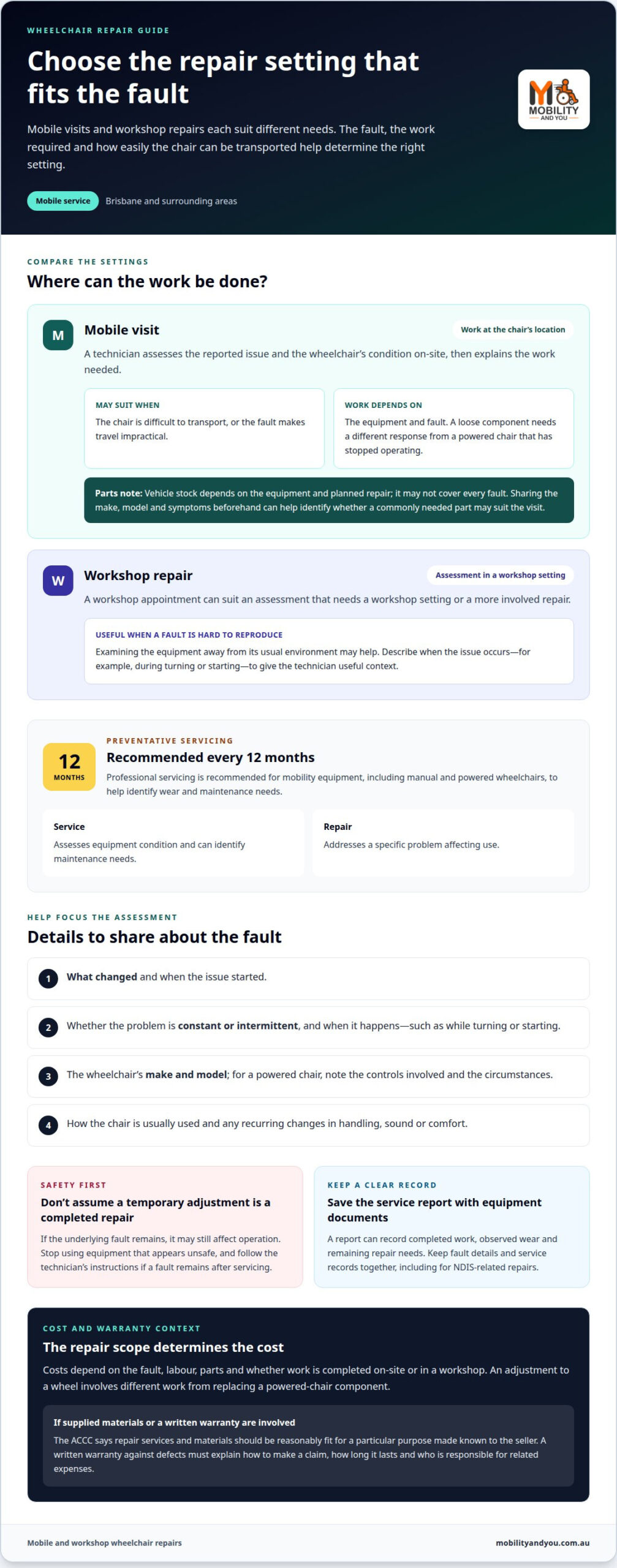
A mobile visit brings assessment and repair work to the wheelchair’s location. This can help when the chair is difficult to transport or the fault makes travel impractical. A technician can assess the reported issue and the chair’s condition, then explain the work needed. A loose component, for example, calls for a different response from a powered chair that has stopped operating.
Mobile repairs can also apply to mobility scooters, with the repair depending on the equipment and fault. A clear description helps focus the assessment: note what changed, when it happened and whether the problem is constant or intermittent. If a powered wheelchair stops responding, describe the controls involved and the circumstances. Avoid attempting a repair that could affect safe operation; an assessment can establish the appropriate work.
Mobile servicing differs from repairing a specific fault. A service can assess equipment condition and identify maintenance needs, while a repair addresses a problem affecting use. The equipment servicing and maintenance process is relevant when a chair needs attention beyond one reported issue. A written record of the fault and work completed can help maintain a clear equipment history.
“Mobile” describes where work takes place, not whether an emergency response is available outside scheduled hours. If a wheelchair or scooter becomes unusable, don’t assume an after-hours visit is available. Stop using equipment that appears unsafe and arrange an appropriate repair.
For NDIS-related repairs, keep the equipment details, fault description and service records together. “NDIS-registered” refers to a provider’s status, not the type of repair a technician performs. Separating these details helps clarify the technical work required and any questions about a participant’s funding arrangements.
Consumer protections also matter when a repair includes supplied materials or a written warranty. The Australian Competition and Consumer Commission (ACCC) says a repair service and its materials should be reasonably fit for a particular purpose made known to the seller. The ACCC also says a written warranty against defects must explain how to make a claim, how long it lasts and who is responsible for related expenses. These details clarify what the warranty covers after repair work.
The cost depends on the repair scope, including any parts required and whether the work is completed on-site or in a workshop.
Wheelchair servicing and preventative maintenance
Preventative servicing helps identify wear before it becomes a repair problem. Professional servicing is recommended every 12 months for mobility equipment, including manual and powered wheelchairs.
Home and facility service visits
A service visit may take place at home, work or a care facility, depending on the service arrangement. The setting can affect how the wheelchair is assessed. A home visit may suit equipment used mainly indoors, while a workplace visit can show how it performs along familiar routes.
Before a visit, note how the chair is usually used and any changes, such as a wheel rubbing when moving between rooms. Care facility staff can describe issues noticed during daily routines, while the wheelchair user can explain changes in comfort or control. These details help the technician focus the assessment on practical needs.
Parts carried in a service vehicle depend on the equipment and planned repair. A technician may need different components for a manual wheelchair than for a powered model, so vehicle stock cannot cover every fault. Providing the wheelchair’s make, model and symptoms beforehand can help identify whether a commonly needed part may be suitable for the visit.
If the required part isn’t on hand, the next step depends on its specifications and the repair. The technician can identify the component needed and arrange the appropriate repair. Don’t treat a temporary adjustment as a completed repair if the underlying fault remains.
A workshop appointment can suit an assessment that needs a workshop setting or more involved repair work. Examining the equipment away from its usual environment may help when a fault is difficult to reproduce at home. Describe when the issue occurs, such as during turning or starting, to give the technician useful context.
Service reports and equipment safety
A service report can record the work completed, observed wear and any remaining repair needs. For example, it can distinguish a completed adjustment from a fault that still affects the wheelchair’s operation. Keep the report with the equipment documents so users, caregivers and facility staff can share accurate maintenance information.
After servicing, the technician should explain relevant findings in plain language, including any issue that affects safe use. If a fault remains, follow the technician’s instructions rather than assuming the wheelchair is ready for every task. This matters particularly for powered wheelchairs, where a control or drive problem may affect movement.
For routine maintenance, note recurring changes in handling, sound or comfort and share them at the next service. This record helps focus the inspection and supports informed decisions about ongoing wheelchair care.
Technician experience and customer feedback
Before arranging wheelchair repairs, identify the chair’s make, model, fault and any recent changes. Consider whether the technician has experience with that type of wheelchair, whether the repair involves original equipment manufacturer (OEM) parts, and whether requested changes are repairs or modifications.
Experience matters because manual and powered chairs have different systems to assess. Relevant experience includes understanding the reported fault, explaining the proposed work and documenting what was completed. A wheel alignment concern, for example, calls for a different assessment from a powered chair that loses drive. Customer feedback can add context about communication and service, although each account describes an individual experience.
Reports about technician Dean describe long-term wheelchair maintenance and repairs. One customer said Dean maintained their wheelchair for 5 years, while another reported his involvement with Chloe’s wheelchair servicing for 6 years. A separate customer said they had known Dean since 2014 and received repairs, scheduled servicing and preventative maintenance advice. These examples show the range of work customers have described, from fault repairs to ongoing care.
Other feedback refers to specific circumstances. One customer reported receiving assistance with wheelchair maintenance and repairs for more than 4 years. Another said Dean had worked with Russ for around 6 years, including equipment servicing and recommendations. A customer also described a wheelchair arranged around archery requirements and daily needs. That example highlights why technicians need to understand how a person uses their equipment, not only the fault they report.
OEM parts are components made for a particular equipment brand or model. Matching a part to the wheelchair helps keep the repair suited to its design. Selection depends on the make, model and fault, and an assessment establishes which component is needed. A compatible alternative is a separate option and should be clearly distinguished from an OEM component in the repair explanation.
Customisation means changing equipment to better suit a person’s daily use, while a repair restores a faulty component. Custom wheelchair modifications can involve different considerations from replacing a worn part. Describe seating or access requirements alongside the person’s usual activities, such as archery or moving around the home. This gives the technician context to discuss suitable equipment changes without confusing them with fault repairs.
Customer feedback is most useful when it gives details about the equipment, work and communication. A report about routine servicing offers different insight from one describing a repair during a difficult situation. Those specifics help clarify the range of technician experience with wheelchair needs.
Temporary repair solutions while parts are arranged
A temporary repair is not the same as a completed repair. If a part needs to be sourced, the technician can explain what work can happen now, what remains outstanding and whether the equipment can be used safely in the meantime. The answer depends on the fault and the wheelchair’s condition.
Are loan wheelchairs available while repairs are being completed? A loan wheelchair isn’t automatically included with a repair. Access to temporary equipment is a separate arrangement, and suitability depends on the person’s needs and the equipment available for hire.
Before work begins, the technician should identify the failed component and explain the repair plan in plain language. A damaged wheel assembly, for example, may need a correctly matched replacement, while a powered chair fault may need diagnosis before the required component is clear. Don’t present a temporary adjustment as a permanent fix if the original problem remains.
Ask for a clear distinction between completed and pending work. A useful repair update describes:
- The fault that has been assessed and the component involved.
- Any work completed before the replacement part arrives.
- What remains to be done once the required part is available.
- Any instructions about using or not using the wheelchair meanwhile.
This information helps the wheelchair user, family or care team plan. If the chair can’t be used until a part is fitted, for example, a caregiver can consider other suitable transport arrangements instead of relying on an uncertain repair date. Keep the technician’s notes with the equipment records so outstanding work is clear at follow-up.
A substitute wheelchair needs to suit the person, not simply resemble the one being repaired. Differences in seat support, controls, dimensions or daily use may affect whether a temporary chair is suitable. A powered-chair user, for instance, may need controls they can operate. An occupational therapist can help describe functional requirements when these affect equipment choice.
Equipment hire is distinct from a repair or a loan supplied during repair work. If hire is being considered, the relevant mobility equipment hire options can help frame that separate decision. The right equipment depends on intended use and personal requirements, rather than the repair fault alone.
Once the part is ready, the repair can proceed using a replacement suited to the equipment and fault. The technician should explain any remaining work and record the repair. A clear handover states whether the original issue has been resolved or still needs attention, so everyone involved understands the wheelchair’s status.
Workshop repairs for manual and powered wheelchairs
A workshop repair can suit faults that need closer inspection, component replacement or testing beyond a basic adjustment. The wheelchair type matters: manual chairs have mechanical parts, while powered chairs also have electrical and control systems. A careful assessment connects the reported problem to the work required rather than treating every fault alike.
For a manual wheelchair, a technician may inspect the frame, wheels, castors, brakes and moving joints. A chair pulling to one side, for example, could have a wheel alignment, tyre or castor issue. The technician can examine how the parts work together, identify the fault and explain whether adjustment or replacement is appropriate. A workshop can make it easier to remove and examine components that need more detailed attention.
Powered wheelchair repairs involve additional checks. If a chair won’t respond to its controls, the controls, connections or drive system may need assessment before a repair decision can be made. Workshop testing can help distinguish the symptom from its cause. The technician should explain what was tested, what work or part is proposed, and whether any issue remains after repair.
A clear repair process follows a practical sequence:
- Record the wheelchair’s make, model and reported fault.
- Inspect the relevant parts and identify the likely cause.
- Explain the proposed work and any replacement component.
- Complete the repair, then assess the affected function.
- Describe the outcome and any remaining maintenance needs.
This process is useful when a fault appears only during a particular activity. A manual chair might become difficult to turn, for instance, while a powered model may lose movement after a control input. Explain when the symptom occurs to give the technician a specific situation to investigate and help distinguish a recurring issue from a one-off change in handling.
Workshop work can also be part of planned equipment maintenance, rather than a response to a breakdown. The distinction matters: a repair addresses a known problem, while maintenance assesses the equipment’s condition and identifies any work needed. A report can record completed repairs and outstanding items, giving the wheelchair user and support team a shared reference for future decisions.
Before a workshop appointment, bring or provide the wheelchair’s identifying details and a concise fault description. Mention any recent change, such as a new sound, reduced control response or altered handling. That information helps focus the assessment without assuming the cause. If the repair requires a part, the technician can explain how it relates to the fault and what work remains.
For help arranging an assessment, contact the service team about a wheelchair repair and describe the equipment and issue.
Mobility and You: Wheelchairs
Mobility and You supplies wheelchairs and provides servicing and maintenance for mobility equipment. If your wheelchair needs attention, or you’re considering a chair suited to everyday use, contact the team to discuss the equipment’s make, model and the issue you’ve noticed.
Mobility and You also offers power chairs, mobility scooters and walkers. These options may be relevant if your mobility needs have changed or you’re considering equipment alongside a repair. The right choice depends on how you use your equipment and the tasks you want it to support.
For a personalised discussion about wheelchair repairs or equipment, contact Mobility and You.
Keep your next step focused on everyday mobility
A repair decision can be a useful opportunity to consider how your equipment fits your routine. Think about the activities you want to return to, the places you need to move through and whether your current setup still supports them. These priorities can guide a practical conversation about wheelchair repairs and keep the focus on independence, not just the fault.
Mobility and You provides wheelchair repairs and equipment servicing, as well as mobility equipment. Describe what matters in your day, such as getting around at home or taking part in regular activities, to give the discussion a clear starting point. You can also discuss whether a wheelchair, power chair or mobility scooter best suits your needs.
Contact Mobility and You about repairs to discuss your wheelchair and the support you need. A considered next step can help you move towards equipment that supports your everyday life with greater confidence.
Frequently Asked Questions
Who repairs manual and powered wheelchairs?
Mobility and You services and repairs mobility equipment, including wheelchairs, across different brands. Start a repair enquiry with the chair’s brand, model and fault. For example, describe whether a manual chair is difficult to steer or a powered chair’s controls aren’t responding. Those details help clarify the equipment and issue.
Which areas can wheelchair repair services cover?
Mobility and You serves customers nationally. Whether a particular repair can be handled as an on-site visit depends on the service arrangement and the equipment involved. When describing where the wheelchair is located, include the suburb and whether it’s at home, work or a facility. This gives the service team useful context for discussing the repair pathway without assuming every repair uses the same setting.
What wheelchair brands and models can be serviced?
Mobility and You services and repairs mobility equipment across brands, including wheelchair brands beyond its listed supplier partners. Its partners include Drive, Invacare, CTM, Pride, K-Care, Freedom HC, Days, Vulcan, Avante and Shoprider. Share the exact brand and model from the chair’s label, along with a description of the fault. This helps identify the equipment and relevant parts or repair requirements.
Are mobile or in-home wheelchair repairs available?
Mobility and You’s service vans provide on-site servicing and repairs. The right setting depends on the fault and equipment, so describe where the wheelchair is used and what has stopped working. Explain, for example, if the chair is difficult to transport or the problem occurs only during a particular activity. This context helps clarify whether an on-site visit suits the repair.
Can NDIS plans cover wheelchair repairs and maintenance in Australia?
NDIS funding for a repair depends on the participant’s individual plan and funding arrangements. Don’t assume every repair or maintenance task will be funded. Before committing to work, review the plan and relevant support arrangements, and keep repair details and any quote with the participant’s records. Mobility and You also provides solutions for Occupational Therapists, who may help describe equipment needs in the context of a participant’s supports.
How quickly can a wheelchair be repaired, including emergency repairs?
Repair timing depends on the fault, the assessment required and whether a suitable part is needed. A straightforward adjustment differs from diagnosing a powered chair fault or sourcing a specific component. Mobile service doesn’t automatically mean after-hours emergency availability. When reporting an urgent problem, explain whether the wheelchair can still be used and which function has failed, so the repair pathway can be considered.
Where can I get wheelchair parts, tyres, batteries and accessories?
Mobility and You offers spare parts online and by phone. For a useful enquiry, provide the wheelchair’s brand and model, along with the part needed or a clear description of the issue. Tyres, batteries and accessories can differ between equipment, so identifying the chair helps narrow down the relevant component. A repair assessment can distinguish a replacement part from a fault that requires broader work.