Last Tuesday, Sarah sat in her driveway staring at a bulky frame that simply wouldn’t budge, feeling her planned outing slip away. It’s a frustrating reality for many of the 4.5 million Australians living with mobility impairments; the equipment designed for freedom can sometimes feel like the biggest obstacle to leaving the house. We believe that finding the right folding wheelchair should restore your spontaneity, not add to your stress. We know you need a chair that’s light enough for a car boot but comfortable enough for an entire afternoon at the park.
You’ll discover how to perfectly balance weight, durability, and cost with our expert comparison of the leading 2026 models. Our team has analyzed everything from manual frames starting around $200 to advanced electric options to ensure you find the perfect fit. We’ll walk you through the latest tech, explain how the 1 July 2026 NDIS policy updates and the I-CAN assessment tool affect your choice, and help you secure a solution that supports your long term independence. This guide provides a clear path toward a purchase backed by expert support and local care.
Key Takeaways
- Learn how a collapsible frame removes barriers to travel and community participation by making vehicle transport effortless.
- Compare the weight, range, and maintenance of manual and electric folding wheelchair options to find your ideal balance of independence and ease.
- Discover which frame materials, like ultra-light carbon fibre or durable aluminium, provide the best support for your specific postural needs.
- Simplify the funding process by understanding the transition to the NDIS I-CAN assessment and the new My Aged Care “Support at Home” program.
- Gain confidence in your choice by learning how personalized trials at a local showroom ensure a perfect fit for your daily life.
What is a Folding Wheelchair and Why is Portability Critical?
A Wheelchair with a folding frame is more than just a mobility tool; it’s a vital link to the world outside your front door. Technically, it’s defined as a mobility aid featuring a collapsible frame that allows for compact storage and easy transport in vehicles or homes with limited space. Most designs use a cross-brace mechanism, where the seat pulls upward to bring the sides together, or a flat-fold design where the backrest drops down to create a lower profile. By choosing a folding wheelchair, you aren’t just buying equipment; you’re investing in the ability to say “yes” to social invitations. A high-quality folding wheelchair preserves a user’s dignity by ensuring they can attend weddings, visit cafes, or enjoy family holidays without the anxiety of logistical barriers.
The Freedom of Vehicle Transport
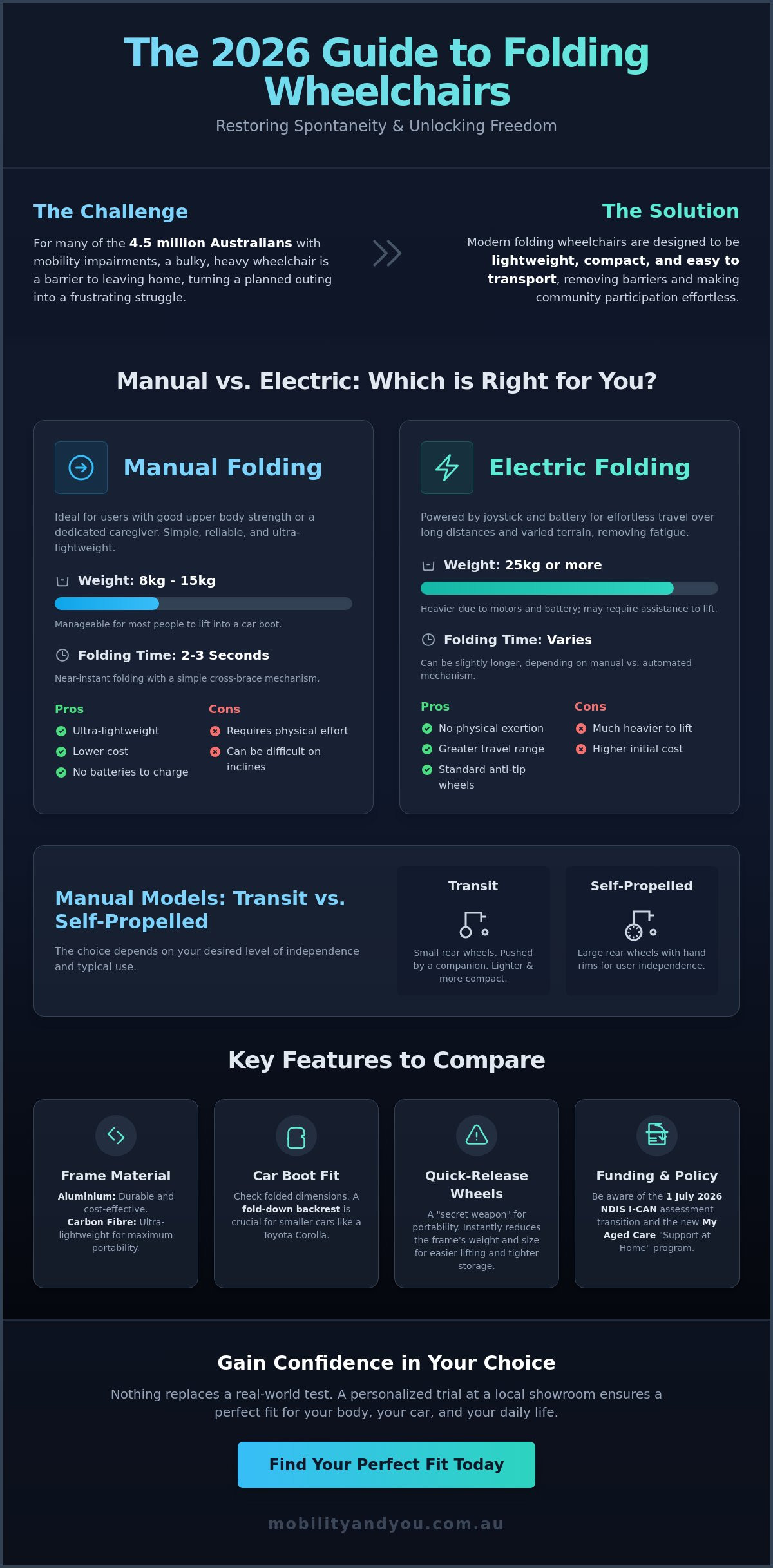
Weight is the most critical factor for families who travel frequently. We often see caregivers struggle with frames weighing over 15kg, which can lead to physical strain or even injury over time. Modern lightweight models often weigh between 9kg and 12kg, making them much safer to lift into a car boot. You should check your specific boot dimensions before making a final choice. While a standard SUV offers plenty of height, a compact hatch like a Toyota Corolla may require a chair with a fold-down backrest to fit comfortably. Quick-release wheels are a secret weapon for portability. With a simple push of a button, you can remove the large rear wheels, significantly reducing the frame’s total weight and footprint for those tighter storage spaces.
Transit vs. Self-Propelled Folding Models
Choosing between transit and self-propelled models depends entirely on your physical needs and how you plan to use the chair. Transit chairs feature small rear wheels and are designed to be pushed by a companion or caregiver. They’re often lighter and more compact, which makes them ideal for short trips to the doctor or local shopping centers. In contrast, self-propelled chairs have large rear wheels with hand rims, allowing the user to navigate independently. If you have the upper body strength to propel yourself, this option offers the highest level of freedom. Even if you usually have help, self-propelled wheels handle uneven Australian footpaths and small curbs better than the smaller wheels found on transit models. If you’re unsure which style suits your lifestyle, our team can help you trial both options to find your perfect fit. You can contact us to arrange a personalized demonstration.
Manual vs. Electric Folding Wheelchairs: A Detailed Comparison
Choosing between a manual or electric folding wheelchair often comes down to your personal energy levels and how you plan to navigate your community. Manual models are ultra-lightweight and offer a lower entry price; they’re a popular choice for those with good upper body strength or a dedicated caregiver. You don’t have to worry about battery levels or electronic malfunctions. Conversely, electric folding chairs use joystick controls and lithium-ion power to provide a greater range without causing physical fatigue. While a manual chair can be collapsed in just 2-3 seconds, electric models may take slightly longer depending on whether they feature an automated or manual folding mechanism. If you’re weighing up all your powered mobility options, our complete guide to electric wheelchair vs. power wheelchair differences in 2026 explains the key functional distinctions to help you make a fully informed decision.
Following the World Health Organization wheelchair provision guidelines, we prioritize ensuring that the technology matches the user’s specific environment. If you frequently navigate steep driveways or long distances on Australian pavements, the power of a motorised unit can be life-changing. We’ve seen many clients regain their confidence once the fear of exhaustion is removed from their daily outings.
Weight and Manoeuvrability Trade-offs
Weight is the most immediate difference you’ll notice during a trial. Manual chairs typically range from 8kg to 15kg, which most people find manageable for lifting into a car boot. Electric chairs often weigh 25kg or more because of the heavy motors and battery packs. This extra weight provides excellent stability outdoors, but it can make indoor manoeuvring in tight hallways more challenging. Most electric folding models now include anti-tip wheels as a standard safety feature. These small rear wheels prevent the chair from tipping backward on inclines, which is essential for maintaining safety on the uneven surfaces often found in local parks.
Battery Life and Travel Considerations
If you love to travel, lithium-ion batteries are a game-changer. Most modern folding electric chairs use batteries that are certified safe for air travel and cruises. We recommend checking with your airline at least 48 hours before flying to ensure your specific battery Watt-hour (Wh) rating is compliant with their safety protocols. To keep your chair in peak condition, try to avoid letting the battery drop to zero percent. Regular servicing for motorised folding units is essential to ensure the electronic components and folding joints remain responsive and safe. If you’re ready to see these differences in person, you can explore our full range to compare the weight and feel of each model for yourself.
Key Features to Compare Before Making a Purchase
Selecting the right folding wheelchair requires a close look at the materials and specifications that define its daily performance. The frame material is your first major decision. Steel frames are generally the most affordable, often found in models near the $200 mark, but they can weigh over 18kg. Aluminium offers a superior balance of strength and lightness, making it the industry standard for reliable portable chairs. For those who require the absolute minimum weight for self-loading into vehicles, carbon fibre frames represent the premium tier. These ultra-light models often weigh less than 10kg, though they sit at the higher end of the manual price spectrum reaching up to $2,000.
Accurate seat measurements are vital for maintaining long-term posture and health. A seat that is too wide can lead to poor spinal alignment and slouching, while a seat that is too narrow increases the risk of skin irritation and pressure injuries. We recommend working with an Occupational Therapist to determine your ideal seat width and depth before you explore our full range of sizes. Additionally, you must consider the weight capacity of the frame. Standard chairs typically support up to 120kg, but we also provide specialized bariatric equipment with reinforced cross-braces designed to support 150kg to 250kg safely.
Tyre choice significantly impacts your comfort on different surfaces. Solid tyres are completely puncture-proof and work beautifully on the smooth floors of shopping centres or hospitals. However, if you plan to navigate bumpy suburban footpaths, pneumatic (air-filled) tyres provide much better shock absorption. They act as a natural suspension system, reducing the vibrations that can lead to muscle fatigue during longer outings.
Comfort and Pressure Care
Quality upholstery is more than a luxury; it is a necessity for skin integrity. We prioritize models with padded, breathable fabrics and tension-adjustable backrests that can be tailored to your unique spinal curve. For users spending more than two hours a day in their chair, integrating specialized pressure care cushions is essential. Many folding frames are designed to accommodate these cushions without interfering with the folding mechanism. You should also consider swing-away footrests, which make transferring in and out of the chair much safer for both the user and the caregiver.
Safety Features and Standards
Every chair we provide meets the rigorous Australian Standards (AS/NZS 3695) for wheelchair safety. This ensures the frame and components can withstand the stresses of daily use in the Australian environment. When comparing models, look at the braking systems. Attendant-controlled brakes on the handles give caregivers more confidence on slopes, while user-controlled manual brakes are essential for independent transfers. In portable electric models, rear suspension and anti-tip wheels are critical features that provide stability when navigating small curbs or uneven ground.
Funding and Hire: Navigating NDIS and My Aged Care
Funding hurdles shouldn’t stand between you and your freedom. The Australian government provides several pathways to help you access a folding wheelchair, though the administrative side can be complex. For participants under 65, the NDIS is the primary source of support. It’s vital to remember that from 1 July 2026, the NDIA began using the I-CAN (Instrument for Classification and Assessment of Support Needs) version 6 tool. This shift moves the focus toward your individual support needs for daily life, rather than just your physical limitations. Our team is here to help you understand how these changes affect your specific plan.
If you’re over 65, your funding will likely come through the “Support at Home” program, which replaced previous home care packages in November 2025. A significant update arrived on 1 October 2026, where the government began fully funding personal care services for eligible participants with available funding. Working with an NDIS registered provider like our team ensures you have a partner who understands these shifting regulations. Most importantly, an Occupational Therapist (OT) assessment is essential to justify how a specific chair meets your clinical and lifestyle goals, ensuring your application has the best chance of approval.
Hire vs. Buy: Which is Right for You?
Not every situation requires a permanent purchase. If you’re recovering from surgery or planning a short holiday, our equipment hire options provide a cost-effective solution without the long-term commitment. For those specifically seeking wheelchair hire on the Gold Coast, our complete 2026 rental guide walks you through model selection, NDIS funding pathways, and everything you need for a seamless short-term arrangement. However, for daily users, owning a custom-fitted chair offers superior comfort and support tailored to your body. We often suggest a trial-to-buy approach, allowing you to test the chair in your own home before making a final decision. This ensures you feel confident that the equipment truly enhances your independence and fits perfectly within your living space.
Maintaining Your Folding Wheelchair
Once you’ve secured your chair, regular maintenance is the key to its longevity and your safety. You should perform monthly checks on folding joints to ensure they move smoothly; applying a small amount of silicone spray can prevent sticking. Check your tyre pressure and look for signs of wear on the upholstery that might affect your posture. For more detailed guides on keeping your equipment in top shape, you can access our resources page. If you ever feel the frame is becoming loose or the battery isn’t holding its charge, our professional technicians are here to help. You can contact our team today to book a professional service and ensure your mobility aid remains reliable for years to come.
Finding Your Perfect Fit with Mobility and You
At Mobility and You, we’ve spent years understanding that a folding wheelchair isn’t just a piece of medical equipment; it’s the key to visiting grandchildren, attending community events, and maintaining your dignity. As a family owned and operated business, we take pride in being a trusted local partner for families across Australia. We’re committed to helping you navigate the evolving mobility landscape by providing clear, honest advice that prioritizes your quality of life. With approximately 4.5 million Australians living with a disability, we know that every individual’s journey toward independence is unique. We’re here to ensure yours is supported by the best tools available.
While you can browse our full range of folding wheelchairs online to compare specifications, we strongly encourage a physical trial. Every body is different. What feels lightweight on a digital spec sheet might feel quite different when you’re actually lifting it into your own car boot. A face-to-face consultation allows us to address your specific pains, from seat comfort to the ease of the folding mechanism, ensuring you leave with total confidence in your choice.
Expert Consultations and Showroom Trials
During a fitting session, our team doesn’t just look at seat width and depth. We watch how you interact with the chair in real time. Can you reach the manual brakes easily? Does the joystick on an electric model feel responsive to your touch? We regularly collaborate with Occupational Therapists to provide tailored solutions that meet the rigorous clinical requirements of NDIS and My Aged Care assessments. Testing the folding mechanism yourself in our showroom provides a level of certainty that no online description can match. It’s about finding that perfect balance between a frame that’s sturdy enough for daily use and portable enough for your lifestyle.
Post-Purchase Support and Servicing
Our relationship with you doesn’t end once you’ve found your perfect fit. We provide comprehensive servicing and maintenance to ensure your equipment remains safe and responsive for years to come. Whether it’s a routine check of the folding joints, battery health diagnostics, or sourcing genuine spare parts, our team is always ready to help. We don’t just sell products; we offer a long term partnership. By joining the Mobility and You family, you gain access to ongoing care and expert advice that keeps you moving. If you’re ready to take the next step, contact us today to book a trial and experience the difference that personalized service makes for your independence and mobility.
Embrace Your Future of Greater Independence
Choosing the right folding wheelchair is a significant step toward a more active and connected life. We’ve explored how modern materials like aluminium and carbon fibre reduce lifting strain, while the latest 2026 funding frameworks under the NDIS and My Aged Care make quality equipment more accessible than ever. It’s about finding that perfect balance where technical specifications meet your personal lifestyle goals.
As a locally owned and operated family business, we bring a compassionate heart to every consultation. Our status as an NDIS Registered Provider means we’re uniquely equipped to help you navigate complex administrative hurdles. Our expert servicing and repair team also ensures your equipment remains reliable for the long term. We believe that mobility aids should empower you; they shouldn’t complicate your day. We’re here to help you find a solution that feels like a natural extension of your life.
Explore our range of folding wheelchairs and regain your freedom today. We’re ready to support you every step of the way. Your journey toward better mobility starts with a single, supportive conversation.
Frequently Asked Questions
Can I take a folding wheelchair on an aeroplane?
Yes, you can take most models on an aeroplane, provided they meet specific airline safety standards. Most 2026 electric models use lithium-ion batteries that are certified for air travel; however, you must notify your carrier at least 48 hours before your flight to confirm their specific Watt-hour limits. Manual chairs are even easier to transport as they don’t have electronic components or battery restrictions.
How much does a lightweight folding wheelchair usually weigh?
A lightweight manual folding wheelchair typically weighs between 8kg and 15kg. If you choose a premium carbon fibre model, the weight can drop below 10kg, while standard steel budget models usually weigh over 18kg. Electric folding models are heavier due to the motors and batteries, with most portable units starting around 25kg.
Are folding wheelchairs as comfortable as rigid frame wheelchairs?
Modern folding chairs offer excellent comfort that rivals rigid frames when they’re fitted with the correct pressure care accessories. We recommend looking for models with tension-adjustable backrests and padded upholstery to support your unique spinal curve. Adding a specialized pressure relief cushion ensures you stay comfortable during long outings without interfering with the chair’s ability to collapse for storage.
Does the NDIS cover the cost of a folding wheelchair?
Yes, the NDIS provides funding for mobility equipment if it’s deemed reasonable and necessary for your independence. Under the framework introduced on 1 July 2026, the NDIA uses the I-CAN assessment tool to determine your specific support needs. Our team works closely with Occupational Therapists to ensure your folding wheelchair application meets all clinical and administrative requirements.
What is the difference between a transit wheelchair and a self-propelled wheelchair?
The primary difference is the size of the rear wheels and your level of independence. Transit chairs feature small rear wheels and are designed to be pushed by a caregiver, making them lighter and more compact for car boots. Self-propelled chairs have large rear wheels with hand rims, allowing you to move the chair yourself and navigate uneven Australian footpaths more easily.
How do I measure myself for the correct folding wheelchair seat width?
To find your ideal seat width, measure the widest part of your hips or thighs while you are sitting down on a flat surface. You should add approximately 2cm to 4cm to this measurement to ensure the frame doesn’t rub against your skin while allowing for different types of clothing. Correct sizing is vital because a seat that’s too wide can lead to poor posture and spinal misalignment.
Can I hire a folding wheelchair before I decide to buy one?
Yes, we provide flexible equipment hire options that allow you to test a chair in your own home and community. This is a popular choice for those recovering from surgery or planning a holiday who don’t want to commit to a purchase immediately. A short-term hire period gives you the confidence to see how the chair fits into your daily routine before making a final decision.
What maintenance does a folding electric wheelchair require?
Electric models require consistent battery care and monthly inspections of the folding joints to ensure long-term reliability. It’s important to keep the lithium-ion battery charged and avoid letting it drop to zero percent, as this can reduce its overall lifespan. We also recommend an annual professional service to check the electronic control systems and ensure all moving parts remain safe and responsive.